GERSTEL – SPME Automation for Sample Preparation and Introduction in LC/LC-MS, GC/GC-MS, and Standalone Workflows

In modern analytical laboratories, sample preparation and introduction are often the most time-consuming, labor-intensive, and error-prone steps in the workflow. While high-end instruments such as LC-MS and GC-MS provide unmatched detection power, their performance depends on the quality and consistency of sample preparation. Automated systems play a crucial role in improving efficiency, consistency, and throughput in analytical labs by reducing human intervention and enabling continuous, reproducible operation.

This is where GERSTEL excels.

GERSTEL is a global leader in lab automation and smart systems, specializing in sample preparation and sample introduction systems for LC/LC-MS and GC/GC-MS applications. GERSTEL is recognized for its advanced automated systems that reduce human intervention and standardize procedures, positioning the company at the forefront of lab automation and intelligent workflow optimization. GERSTEL’s expertise extends to chromatography and mass spectrometry, with a particular focus on gas chromatography as a key application area. Beyond direct integration, GERSTEL systems can also be configured as standalone workstations, performing complex sample preparation independently before introducing samples into any analytical platform.

By automating critical steps, GERSTEL helps laboratories achieve greater productivity, reproducibility, enhanced efficiency, and data integrity.

Why Automate with GERSTEL?

Challenge in Manual Workflow GERSTEL Automation Advantage
Time-consuming and repetitive pipetting, weighing, and mixing Hands-free automation frees analyst time for higher-value tasks
Variability in sample prep due to human error High reproducibility and precision, ensuring data consistency
Limited throughput in high-demand labs Scalable automation for large sample batches
Complex multi-step sample prep (derivatization, SPE, SPME, evaporation, etc.) Fully integrated workflows with flexible modules
Risk of contamination or carryover Optimized hardware design with controlled environments

GERSTEL automation offers several advantages over manual sample preparation, including improved speed, reproducibility, and environmental friendliness.

Key GERSTEL Solutions

· MPS (MultiPurpose Sampler):

A versatile platform for automated liquid handling, derivatization, extraction, and injection for LC and GC systems.

· SPE and SPME Automation:

Streamlined solid-phase extraction and microextraction directly integrated or operated as standalone modules. The choice of fiber coated materials and their properties is critical, as it influences extraction efficiency and selectivity based on the specific sample matrix being analyzed.

· Thermal Desorption (TDU, TDS):

Direct introduction of volatiles and semi-volatiles into GC/GC-MS, minimizing sample prep.

· Olfactory Detection Port (ODP):

Unique capability for GC-O analysis, combining human sensory detection with analytical results.

· Standalone Workstations:

GERSTEL modules can operate independently of LC/GC instruments, serving as dedicated sample prep systems for workflows such as evaporation, filtration, dilution, derivatization, and SPE. These modules can efficiently process both liquid and solid matrix samples. Samples can then be transferred to any analytical system, giving laboratories greater flexibility.

Applications of GERSTEL Automation

Lab Alliance GERSTEL systems are trusted across a wide range of industries and are suitable for various samples, including complex forensic and environmental matrices:

·         Environmental Analysis

o   Pesticides in drinking water

o   Volatile organic compounds (VOCs) in air and soil

o   PFAS and emerging contaminants in wastewater

o   Microplastics in water, soil, and environmental samples (GERSTEL TED-GC/MS and Pyrolysis-GC/MS solutions)

o   GERSTEL supports green analytical methods by reducing solvent and reagent consumption in environmental workflows.

·         Food & Beverage

o   Pesticide residue analysis in fruits and vegetables

o   3-MCPD and glycidyl esters in edible oils

o   MOSH/MOAH analysis in edible oils, packaged foods etc

o   Flavor and fragrance profiling in beverages

o   Microplastics in bottled water and food contact materials

o   GERSTEL automation enables green analytical methods for food safety by minimizing solvent and reagent use.

·         Pharmaceutical & Life Sciences

o   Residual solvents in drug formulations

o   Metabolite profiling for drug discovery

o   Impurities and extractables/leachables in packaging

·         Forensics & Toxicology

o   Drugs of abuse in biological fluids

o   Explosives and accelerants in criminal investigations

o   Toxicological screening for poisons and toxins

o   GERSTEL automation is versatile for various samples, such as blood, urine, and environmental materials, supporting forensic investigations.

·         Materials & Polymers

o   Emission testing from building materials and plastics

o   Outgassing studies of automotive components

o   Migration testing of additives in polymers

o   Microplastic and polymer particle identification in consumer products

Spotlight: Microplastics Analysis with GERSTEL

Microplastic contamination is a growing global concern for environmental health, food safety, and materials research. GERSTEL provides unique, ready-to-use automated solutions that address this challenge:

·         TED-GC/MS (Thermal Extraction and Desorption GC/MS):

Allows direct thermal extraction of microplastic particles from filters, environmental samples, or food products, followed by GC/MS analysis. This provides fast, reliable identification of polymer types without complex manual steps.

·         Pyrolysis-GC/MS:

Complements TED-GC/MS by enabling complete polymer breakdown and fingerprinting, useful for identifying complex or mixed microplastic samples.

Together, these solutions enable laboratories to reliably identify and quantify****microplastics in diverse matrices, meeting growing regulatory and research demands.

Data-Driven Process Control in GERSTEL Automation

In today’s fast-paced analytical laboratories, data-driven process control is transforming the way sample preparation is managed. GERSTEL’s automated sample preparation systems harness advanced data integration and smart process control to optimize every step of the sample preparation workflow. By automating sample preparation, laboratories can significantly reduce human error and achieve highly reproducible results, even when handling complex matrices or high throughput applications.

GERSTEL automation seamlessly integrates with existing analytical instruments, such as mass spectrometry and chromatography systems, ensuring that sample prep is fully aligned with downstream analysis. This integration allows for real-time monitoring and adjustment of the preparation process, guaranteeing consistent results and reliable data across a broad range of sample types—including blood and urine samples, environmental samples, and food samples.

A standout feature of GERSTEL’s approach is the implementation of miniaturized sample preparation techniques, such as solid phase microextraction (SPME) and automated liquid-liquid extraction (LLE). These methods not only reduce solvent usage and waste, supporting greener sample preparation approaches, but also enable the analysis of volatile compounds and trace-level target analytes with enhanced sensitivity. Automated liquid extraction and solid phase extraction (SPE) modules further streamline the preparation of liquid samples and solid matrices, ensuring sample integrity and compliance with regulatory standards.

Robotic systems are at the heart of GERSTEL’s sample preparation automation, providing minimal human intervention and eliminating the inconsistencies associated with manual preparation. This is especially critical when working with challenging sample matrices or volatile compounds, where manual processes can compromise sample quality. By automating the preparation process, laboratories can maintain high standards of quality control and ensure that every sample is processed with precision.

GERSTEL’s advanced features, such as thermal desorption and column switching, further enhance efficiency and flexibility in analytical chemistry workflows. These capabilities allow for rapid switching between different sample preparation techniques and analytical methods, supporting high throughput analysis and enabling laboratories to process more samples with consistent, reproducible results.

The key benefits of GERSTEL’s data-driven automation include reduced solvent usage, improved reproducibility, increased throughput, and robust quality control. By automating sample preparation workflows, laboratory staff are freed from repetitive manual handling, allowing them to focus on data analysis and interpretation. Whether working with urine samples, environmental monitoring, or food analysis, GERSTEL’s automated sample preparation solutions deliver reliable results and help laboratories meet stringent regulatory standards.

In summary, GERSTEL’s data-driven process control and advanced automation technologies empower laboratories to optimize their sample preparation workflows, minimize human errors, and achieve consistent, high-quality results across diverse and complex sample types.

Manual vs Automated Sample Preparation

Aspects Manual Preparation GERSTEL Automation
Reproducibility Analyst-dependent, variable results Consistent and validated workflows
Throughput Limited by analyst capacity High throughput, scalable to large batches
Complex Workflows Tedious, error-prone for multi-step prep Fully automated, reliable multi-step handling
Integration Requires manual transfer to instrument Seamless with LC/LC-MS, GC/GC-MS, or as standalone
Labor Efficiency High labor demand, repetitive tasks Hands-free operation, frees analysts for data analysis
Contamination Risk Higher risk with manual handling Minimized with enclosed, optimized design

Automated sample preparation with GERSTEL enables lower detection limits, allowing for more sensitive and reliable trace analysis. This improved analytical sensitivity is essential for detecting compounds at extremely low concentrations, such as parts per trillion (ppt), and enhances the effectiveness of advanced techniques like SPME.

The GERSTEL Advantage

By implementing GERSTEL sample preparation and introduction systems, laboratories gain:

·         Higher efficiency – automate repetitive tasks, reduce turnaround time.

·         Better data quality – reproducible results across analysts and shifts.

·         Lower operating costs – less manual labor, reduced sample rework.

·         Standalone or integrated flexibility – use GERSTEL modules with LC/LC-MS, GC/GC-MS, or as a dedicated workstation.

·         Unique solutions for emerging challenges – such as TED-GC/MS and Pyrolysis-GC/MS for microplastic analysis.

·         Future-ready workflows – modular, flexible platforms that grow with evolving analytical needs.

From single-instrument setups to fully automated standalone workstations, GERSTEL provides the tools to ensure analytical systems deliver their maximum performance.

📩 Contact us to learn how GERSTEL automation solutions can streamline your laboratory’s workflows — whether integrated with LC/GC systems or as a standalone workstation.

Showing all 3 results

MAESTRO Software

MAESTRO Software

Introduction Perfectly Synchronized

The MAESTRO software operates all GERSTEL modules and system solutions in a simple and efficient manner. MAESTRO can be operated as stand-alone software or fully integrated with the Agilent Technologies ChemStation. Just one method and one sequence table runs the complete system from Sample Prep and Sample Introduction to GC/MS or LC/MS analysis. Set-up is performed in a very simple manner: By mouse-click.

MOSH/MOAH Data Analysis

MOSH/MOAH Data Analysis

MOSH/MOAH Data Analysis is a powerful software package for the evaluation of chromatograms produced during MOSH/MOAH analytics.

Olfactory Data Interpreter (ODI)

Olfactory Data Interpreter (ODI)

GERSTEL Enterprise Edition powered by OpenChrom

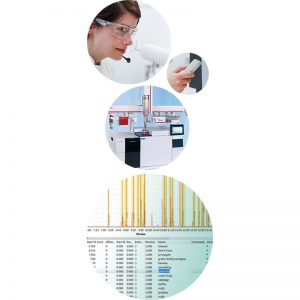
The GERSTEL Olfactory Data Interpreter (ODI) enables fast and reliable evaluation of olfactory information including identification of unknown odor-active compounds. Chromatography data is typically acquired using a mass spectrometer / mass selective detector (MSD), a Flame Ionization Detector (FID) or a Sulfur Chemiluminescence Dectector (SCD) or a combination thereof. The chromatogram is loaded into the ODI software, which automatically recognizes the chromatogram data format before importing the data. In parallel, an olfactogram is imported with information provided by the user as he or she assessed odors eluting from the GC column in parallel with the detection process during the GC run. The olfactogram combines spoken comments from the sensory analyst and the registered intensities along a time axis. The „Olfactory Intensity Device“ (OID) conveniently enables the user to indicate the intensity of the olfactory impression as it transpires. Text comments are added using voice recognition software to translate spoken descriptors. The combined information is presented in the ODI-Software in a clear and concise overview including a chromatogram, an olfactogram and a table.