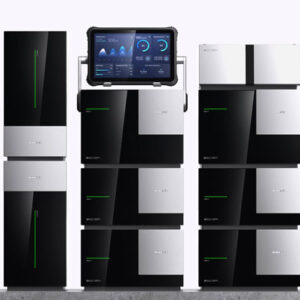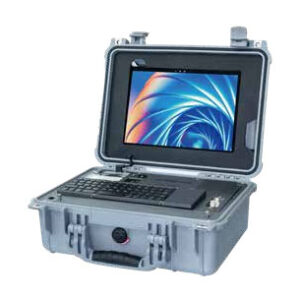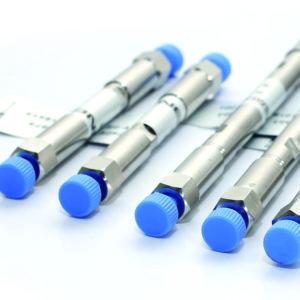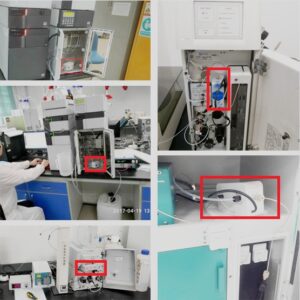

Ion Chromatography (IC) is a powerful analytical technique designed for the separation and quantification of anions and cations in liquid samples. In chemical analysis, an ion is an atom or molecule that has gained or lost one or more electrons, resulting in a net electrical charge. From simple salt analysis to complex environmental monitoring, IC has become the go-to method for researchers, industries, and laboratories that demand accuracy, reproducibility, and sensitivity. Ion chromatography is used to identify the presence and concentration of specific ions in a sample.
Ion chromatography is used to separate ions based on their interaction with a specialized resin, allowing precise detection even at trace concentrations. The technique is used to analyze environmental samples, such as water and soil, for contaminants. The importance of accuracy in IC means that sample preparation and calibration should be performed according to standard protocols. The sample needs to be free from contaminants to be suitable for analysis. After the explanation of the IC system, all steps must be followed precisely for reliable results. The separation of a mixture of ions occurs at the point of injection in the chromatographic column, that is, the ions are separated based on their charge. Separation is achieved by the ion exchange mechanism in the chromatographic column.
There are various types of IC systems and applications used to meet different analytical needs.
The basic principle of ion chromatography lies in its ability to separate ions and polar molecules based on their interaction with a charged stationary phase. In this process, the resin or gel matrix used as the stationary phase contains covalently bound functional groups, allowing ion exchange to occur as the sample passes through the system. The ions present in the solution will exchange with those already on the resin, resulting in separation based on the charge and size of the ions. In this way, different ions can be accurately detected and quantified, even in the presence of a small number of other ions. This principle enables highly specific and sensitive ion analysis, making the technique very useful for identifying ions in various types of samples.
Sample preparation is a critical step to ensure accuracy in ion chromatography analysis. The process begins with collecting a small amount of sample from the desired source, followed by purification to remove contaminants that may interfere with results. The sample is then homogenized to ensure uniformity, and if necessary, it may be diluted or concentrated to achieve an ion concentration suitable for analysis. It is important to ensure the sample is free from ions or other substances that could cause interference, as the presence of foreign materials may affect the sensitivity and accuracy of ion detection. With careful preparation, you can ensure that the ion analysis results are accurate and reliable.
Shine Ion Chromatography instruments at Lab Alliance are trusted across industries for a wide range of applications:
This ability to integrate with complementary techniques makes Shine Ion Chromatography a powerful platform for both routine testing and high-level research.
In analytical laboratories, a common question arises: When should Ion Chromatography (IC) be used compared to Atomic Absorption Spectroscopy (AAS), Inductively Coupled Plasma Optical Emission Spectroscopy (ICP-OES), or Inductively Coupled Plasma Mass Spectrometry (ICP-MS)?
The choice depends on the target analytes and the analytical objectives.
| Technique | Best Suited For | Strengths | Considerations |
| Ion Chromatography (IC) | Inorganic anions (chloride, nitrate, sulfate, phosphate) and small cations (sodium, potassium, calcium, magnesium) | Separates and quantifies multiple ionic species in a single run, which allows for simultaneous detection of multiple ions; direct aqueous analysis; adaptable for hyphenation (IC–MS, IC–ICP-MS, IC–Pyrolyzer) | Primarily focused on ionic species; not designed for trace metals at ultra-low levels |
| AAS (Atomic Absorption Spectroscopy) | Single-element metal analysis | Simple, robust, cost-effective; suitable for routine testing | Limited to one element per run; less efficient for multi-element analysis |
| ICP-OES (Optical Emission Spectroscopy) | Multi-element analysis of metals at ppm levels | Fast, simultaneous detection of multiple metals; widely used in environmental and industrial labs | Less effective for common anions; matrix interferences may occur |
| ICP-MS (Mass Spectrometry) | Ultra-trace detection of metals and selected elements (ppb–ppt) | Extremely sensitive; provides isotopic information | Higher cost and complexity; may not be necessary for routine ionic species |
In ion chromatography, data analysis is an important process for determining the presence and quantity of ions in a sample. The data obtained are usually displayed in graphical form or as a chromatogram, where each peak represents a specific ion. The first step is to identify the peaks corresponding to the ions being tested, followed by calculating the ion quantity based on the height or area of those peaks. In addition, you must also consider the sensitivity and selectivity of the detection system, as the presence of other ions or foreign substances can affect results. With careful data analysis, you can ensure that the results obtained are accurate, allowing detection of ions even at very low concentrations.
Although ion chromatography is a very powerful technique, there are some limitations to consider. One of the main challenges is detection sensitivity, which can be influenced by ion concentration in the sample, sample size, and detection conditions. The presence of other ions or organic molecules in the sample may also cause interference, making it more difficult to separate and detect certain ions. Additionally, if ions have similar charge or size, separation may not be clear, leading to less accurate results. Therefore, careful sample preparation and appropriate selection of detection techniques are essential to minimize these limitations in ion analysis.
The future of ion chromatography is very promising with the emergence of new technologies and detection techniques. Innovations such as the use of membrane exchange chromatography can enhance separation efficiency and ion detection sensitivity, enabling faster and more accurate ion analysis. Furthermore, the introduction of detection techniques such as conductivity and pulsed amperometric detection opens opportunities to detect ions at lower concentrations and in various types of samples. With these advancements, ion chromatography is expected to remain a preferred choice for ion analysis in chemistry, biology, pharmaceuticals, and various other industries. These technological developments will help expand IC applications, deepen our understanding of ions, and support the development of new products and technologies.
As the official distributor of Shine Ion Chromatography systems, we provide cutting-edge instruments designed to meet the diverse needs of modern laboratories. Shine IC systems stand out for:
Your Partner in Ion Chromatography Testing
Whether you are setting up a new ion chromatography test lab or expanding existing capabilities, Shine Ion Chromatography offers reliable, efficient, and cost-effective solutions. As your trusted partner, we are committed to supporting industries, academia, and research institutions in achieving accurate ion analysis.
Contact us today to learn more about Shine Ion Chromatography and how our solutions can optimize your analytical workflows.
Showing all 12 results



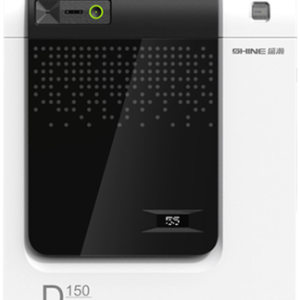
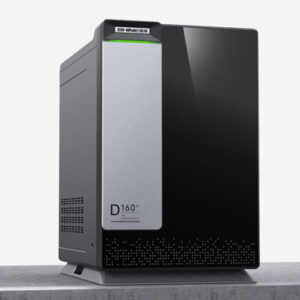

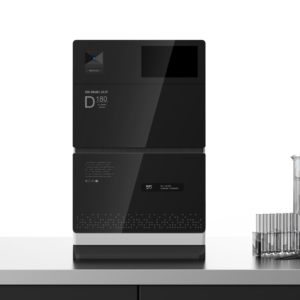
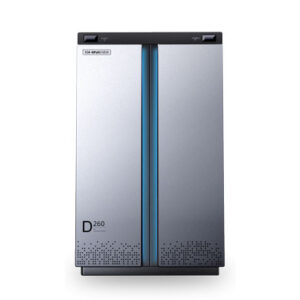
CIC-D260 is a third-generation dual-channel ion chromatograph developed by SHINE.