
Nanoparticle Size Analyzer: Precision Analysis for Reliable Results

Unlock the secrets of your materials with advanced particle characterization.

Why Particle Analysis Matters

In countless industries, from pharmaceuticals to materials science, the size, stability, and concentration of nanoparticles are critical to a product’s performance and quality. Size is one of the most important parameters in nanoparticle research, as it directly influences material properties. A minor change at the nanoscale can have a major impact on a material’s properties, affecting everything from drug delivery efficacy to the consistency of a cosmetic product. For nanoparticle analysis, there are a variety of measurement techniques available, each offering unique advantages for different applications.

Nanoparticle analyzers provide the precise, reliable data you need to ensure product consistency, optimize formulations, and accelerate research and development. There are multiple measurement techniques that can be used to analyze nanoparticles, allowing for comprehensive characterization of their properties. They are an indispensable tool for anyone working with colloids, emulsions, or suspensions.


What Nanoparticle Analyzers Measure: Particle Size

Nanoparticle analyzers are crucial for measuring several key properties that dictate a nanoparticle’s behavior. The measurement of these properties is essential to ensure accurate characterization and optimal application in various fields.

Particle Size and Size Distribution: This is the most fundamental measurement, as the particle size and nanoparticle size directly influence the physical and chemical properties of the nanoparticle. A small change in size can drastically alter a nanoparticle’s properties, such as its color, reactivity, and ability to be absorbed by cells. The analyzer is designed to measure the average size and the size distribution, and to measure the presence of any unwanted aggregates. 

Various techniques can be used to measure the size of the nanoparticle, including laser diffraction, nanoparticle tracking analysis, and the use of a laser in combination with a microscope and camera. These methods can be used to determine the size of the particles and can be used to analyze the size of the nanoparticle population. The analyzer can be, and often is, equipped with multiple detection systems that can be used to provide complementary data. However, it is not always possible to obtain the best accuracy for the smallest particles with every technique, and the choice of method depends on the sample and the measurement goals. 

For the most precise results, it is important to select the best technique that can provide reliable data for the particle size and nanoparticle size. Of this, the data obtained can be used to compare the size of the nanoparticle across different samples, and the measurement outcomes may vary depending on the method that is used. That is why it is crucial to understand the limitations and strengths of each technique, and the analyzer can be used to optimize the measurement process.

Zeta Potential: This measurement indicates the surface charge of a particle and is a critical predictor of a suspension’s stability. Measuring the zeta potential involves analyzing the movement of the nanoparticle in an electric field to determine its surface charge. A high zeta potential (either positive or negative) means the particles repel each other, preventing them from clumping together (aggregation). This is essential for products like drug formulations and cosmetics to maintain their quality and shelf life, but it is important to note that zeta potential measurement is not always sufficient to predict long-term stability.

Concentration: Knowing the number of particles per unit volume is vital for applications where dosage or specific particle counts are important, such as in drug delivery or vaccine development. The sample is analyzed to determine the concentration of the nanoparticle, and the analyzer can be used to provide accurate quantification. Nanoparticle tracking analysis can be used to measure both the size and concentration of nanoparticles in suspension, offering a powerful tool for the measurement of these critical parameters.

Why These Measurements Are So Important

The data from nanoparticle analyzers is used to ensure quality control, optimize performance, and guarantee safety across various industries. The measurement of the particle size and nanoparticle size is critical, as it is directly linked to the effectiveness and safety of products. Selecting the best technique for the measurement is essential, but it is important to note that not all methods are suitable for every application; that is, some techniques may provide high accuracy for spherical particles, but it is not always reliable for irregular shapes. The size of the nanoparticle and the size of the particles can be used to assess product consistency, and the measurement data can be used to improve formulations. Of this, accurately measuring the nanoparticle size is vital for the development and quality assurance of advanced materials.

Pharmaceuticals and Medicine: For drug delivery systems, the size of nanoparticles determines how they are absorbed by the body, how they target specific cells, and how they release the drug. For example, a drug encapsulated in a nanoparticle must be the right size to enter a tumor cell but avoid being cleared by the immune system. Nanoparticle analyzers can be used to measure the particle size and be used to monitor the consistency of each batch, ensuring the nanoparticle size meets strict pharmaceutical standards.

Cosmetics and Consumer Goods: In products like sunscreens, the use of nano zinc oxide or titanium dioxide provides transparent UV protection. If the particles are too large, the sunscreen will appear white and pasty on the skin. Analyzers ensure the particles are consistently small enough for a desirable aesthetic. For the cosmetics industry, accurate measurement of the particle size and the distribution of nanoparticles is crucial to maintain product quality and meet regulatory requirements.

Materials Science: The properties of materials like paints, inks, and ceramics are heavily dependent on the size and dispersion of the nanoparticles they contain. Controlling these parameters allows manufacturers to achieve specific colors, strengths, and textures. Advanced analyzers that can measure the nanoparticle size distribution and the particle size precisely are essential for optimizing material properties.

Food and Beverage: Nanoparticle analyzers are used to study the stability of emulsions in products like milk, dressings, and flavorings. They help prevent separation and ensure a consistent consumer experience. To measure the stability of these emulsions, measuring the size of the nanoparticles and the particle size distribution is necessary to ensure product uniformity and shelf life.

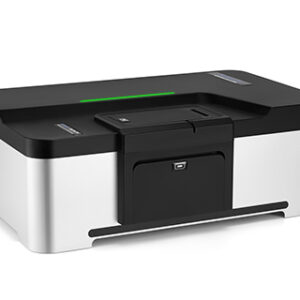
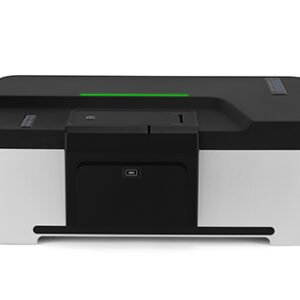
The Bettersize BeNano 180 Zeta Max

The Bettersize BeNano 180 Zeta Max is a state-of-the-art nanoparticle analyzer that combines light scattering and transmission techniques to provide a comprehensive analysis of suspensions and emulsions. It measures a range of properties, including particle size, concentration, molecular weight, zeta potential, refractive index, and rheological properties.

The BeNano 180 Zeta Max employs several key technologies based on the fundamental principles of light scattering:

Dynamic Light Scattering (DLS): Also known as Photon Correlation Spectroscopy (PCS) or Quasi-Elastic Light Scattering (QELS), DLS measures particle size by analyzing the Brownian motion of particles in a liquid. The instrument uses an avalanche photodiode (APD) detector to collect scattered light from particles. The fluctuations in the scattered light, caused by the particles’ random motion, are measured over time and converted into a correlation function. From this, the diffusion coefficient is calculated, which is then used to determine the hydrodynamic diameter of the particles using the Stokes-Einstein equation:

D= k_BT/3πηd

where D is the diffusion coefficient, k_B is the Boltzmann constant, T is the absolute temperature, η is the viscosity of the liquid, and d is the particle diameter. The BeNano 180 Zeta Max uses backscattering DLS (173°), which is more sensitive and effective for samples with a wide range of concentrations, including highly concentrated ones.

Electrophoretic Light Scattering (ELS): ELS is used to measure zeta potential, a key indicator of particle stability. When an electric field is applied to a dispersion, charged particles move toward the oppositely charged electrode. This movement, known as electrophoresis, causes a Doppler shift in the scattered light’s frequency. The instrument measures this frequency shift to determine the electrophoretic mobility, which is then used to calculate the zeta potential. The BeNano 180 Zeta Max utilizes Phase Analysis Light Scattering (PALS), a highly sensitive ELS technique that provides accurate zeta potential measurements even for samples with low electrophoretic mobility, such as those in high-salt or organic solvents.

Static Light Scattering (SLS): SLS is a non-invasive technique that measures the time-averaged intensity of light scattered by a sample to determine the molecular weight of particles or macromolecules in a liquid. This method is particularly useful for samples with a size of less than 30 nm. It can also provide the second virial coefficient (A_2), which offers insights into the intermolecular interactions between particles.

The BeNano 180 Zeta Max also incorporates other advanced features, such as a 0° detector module for measuring concentration, refractive index, and microparticle size via sedimentation. An integrated auto-titrator allows for automated pH-dependent studies, which is crucial for determining the isoelectric point (IEP) of a sample.

In addition to DLS, several other techniques can be used to measure the nanoparticle size and the particle size, each with unique advantages and limitations. Transmission Electron Microscopy (TEM) and Scanning Electron Microscopy (SEM) provide direct visualization of the nanoparticle using a microscope and can be used to analyze shape and morphology, but it is not always suitable for routine quality control due to sample preparation complexity. 

Laser diffraction uses a laser to measure the size of the particles rapidly and is widely used in industry, but it may not be the best choice for very small nanoparticles. Nanoparticle tracking analysis (NTA) is another technique that can be used to track and measure the size distribution of nanoparticles in liquid suspension, offering high-resolution data for the measurement of the nanoparticle size. Selecting the best method depends on the specific requirements of the application, and the combination of these techniques often provides the most comprehensive understanding of the particle size and distribution.

Key Features and Benefits of Bettersize 180 Zeta Max Dynamic Light Scattering

Comprehensive Analysis: Measure the particle size, zeta potential, molecular weight, and concentration all in one instrument. This analyzer can be used for a variety of applications and can be used to measure the nanoparticle size, size of the particles, and the nanoparticle characteristics, giving you a complete picture of your sample without the need for multiple devices.

High-Sensitivity Technology: Utilizing a combination of Dynamic Light Scattering (DLS), Electrophoretic Light Scattering (ELS), and advanced detectors, the BeNano 180 Zeta Max provides accurate and repeatable results, even for challenging samples. It is ideal for the measurement of nanoparticle size for the most demanding applications, and the integration of DLS and ELS ensures high sensitivity and the best performance for the analysis of this type of sample.

Wide Application Range: Whether you’re working with drug delivery systems, protein formulations, paints, or food emulsions, this analyzer is designed to handle a broad range of applications and sample types with precision. It features advanced technologies that can measure the particle size, nanoparticle size, and zeta potential, making it suitable for a wide variety of research and industrial needs.

Optimized for Stability: The highly sensitive zeta potential measurement helps you predict and control the stability of your colloidal systems, preventing aggregation and ensuring a longer shelf life for your products. The analyzer is optimized to measure the zeta potential and is capable of measuring the stability of colloidal dispersions, which is crucial for the measurement and control of nanoparticle stability.

User-Friendly Software: Intuitive software makes it easy for both new and experienced users to set up measurements, analyze data, and generate detailed reports, streamlining your workflow. The measurement process is simplified, allowing users to quickly obtain accurate results for the particle size and nanoparticle size.

Robust and Reliable: Built with quality components, the BeNano 180 Zeta Max at Lab Alliance delivers consistent performance and requires minimal maintenance, providing a reliable solution for your lab for years to come. It is considered one of the best analyzers for measuring the particle size and nanoparticle size, ensuring robust and reliable results for the nanoparticle analysis.

Ready to Elevate Your Research?

Call us today for a product demo or send us your samples for analysis to see how the Bettersize BeNano 180 Zeta Max can provide the data you need for success.

Showing all 2 results

BeNano 180 Zeta Pro

BeNano 180 Zeta Pro

BeNano 90 Zeta

BeNano 90 Zeta