Particle Size Distribution: Precise Characterization with Bettersize’s Analyzers

Leading particle size analysis provider – Bettersize Instruments offers a comprehensive range of particle size analyzers, from basic to advanced, for analyzing materials across a vast size range (millimeters to nanometers).

Founded in 1995, they’ve become a global leader with a mission to empower researchers with superior tools and exceptional service. Bettersize’s dedication to understanding material properties has earned them the trust of countless scientists and engineers worldwide.

Understanding the World of Tiny Particles: Particle Size and Distribution

In the realm of materials science and engineering, understanding the size and distribution of particles is crucial. To define these terms: ‘particle size’ refers to the diameter or characteristic dimension of an individual particle, while ‘particle size distribution’ defines how the sizes of particles are spread or distributed within a sample. But what exactly are these terms, and why are they so important?

1.2 Particle Size Distribution (PSD)

Particle size distribution (PSD) is often described as the fingerprint of a particulate material. The distribution is commonly represented as a frequency distribution, where the mode is the value with the highest frequency. Key statistical values such as mean, median, and mode are used to describe the central point and spread of the distribution, and these values are defined to ensure clarity. Additionally, three values—D10, D50, and D90—are commonly used to describe the width of the particle size distribution.

Particle Size: It’s All About Scale

A particle’s size refers to its physical dimension, typically expressed in millimeters (mm), micrometers (µm), or nanometers (nm). The most common parameter used is the particle diameter, essentially the distance across a particle at its widest point. Imagine a single grain of sand – its size would be its diameter.

For non-spherical particles, measures such as particle length or aspect ratio may also be used to characterize size, providing a more accurate description of elongated or irregular shapes.

Particle Size Distribution: Unveiling the Mix

While particle size tells us the dimension of an individual particle, particle size distribution (PSD) paints a broader picture. It describes how the sizes of particles are spread out within a sample. Think of a bag of flour – it doesn’t contain identical grains, but rather a mixture of various sizes. PSD describes the percentage of particles within specific size ranges or at a particular size. It’s like a fingerprint for the size variation within a sample.

The width of the distribution can be quantified using statistical measures such as standard deviation, span, and relative standard deviation, which help describe how broad or narrow the particle size distribution is. PSD data provides detailed information about the distribution width and is essential for process control and quality assurance.

Laser Diffraction: Analyzing the Particle Size Distribution

Among the various techniques for measuring PSD, laser diffraction reigns supreme. As the laser beam passes through dispersed particles, it creates a scattering pattern that is analyzed to determine particle size distribution. Small particles scatter light at larger angles, while large particles scatter light more intensely at small angles. The measurement method determines the size distribution by analyzing the angular scattering intensity. The instrument calculates particle sizes and distribution width based on the scattering data, and values such as D10, D50, and D90 are calculated. The sample analyzed should be representative of the full particle size profile. Laser diffraction can be used to measure particles ranging from nanometers to millimeters, including both solid particles and liquid droplets. The mass and surface area of particles can also be derived from the distribution data. Other techniques, such as dynamic light scattering and image analysis, are also used for particle size analysis. Based on this scattering pattern, the instrument calculates a distribution based on the volume percentage of particles – a volume distribution.

Sampling and Sample Preparation: The Foundation of Reliable Results

Accurate particle size distribution analysis begins with proper sampling and sample preparation. The reliability of particle size analysis depends on collecting a truly representative sample that reflects the overall characteristics of the material. If the sample is not representative, the resulting particle size distribution data may not accurately describe the material, leading to incorrect conclusions and potential process issues.

Sample preparation is equally critical. The method chosen must preserve the original particle size and shape to ensure that the analysis reflects the true distribution. Common techniques include sieving for bulk materials, milling to break down agglomerates, and dispersing particles in a liquid medium for methods like dynamic light scattering or laser diffraction. The choice of technique depends on the material properties and the specific requirements of the analysis method. For example, dynamic light scattering and laser diffraction often require particles to be well-dispersed in a liquid medium to prevent clumping and ensure accurate light scattering measurements.

By carefully selecting the appropriate sample preparation technique, analysts can minimize errors and obtain reliable size distribution data. This attention to detail in sampling and preparation forms the foundation for trustworthy particle size analysis, supporting effective distribution analysis and quality control across a wide range of materials and applications.

Bettersize Instruments: A Leading Particle Size Distribution Equipment Provider

Bettersize Instruments is a leading provider of sophisticated particle size analyzers, also known as particle size distribution (PSD) measurement equipment. They offer a diverse range of instruments and methodologies to tackle various application challenges, empowering researchers and quality control professionals alike. Selecting the most suitable instrument or method depends on the properties of the given material and the specific analysis requirements.

The Significance of Particle Size Distribution Measurement

Understanding PSD goes beyond mere characterization; it’s critical for numerous applications. Particle size distribution analysis is widely used across industries for process optimization and quality control:

  • Cement: PSD impacts the hydration time of cement – the time it takes for cement to react with water and harden. A specific PSD is crucial for optimal construction schedules.
  • Coatings: Particle size influences the strength and coverage of coatings applied to surfaces. The right PSD ensures proper adhesion and a uniform finish.
  • Lithium Batteries: Battery capacity is directly linked to PSD. Specific particle sizes optimize the flow of ions within the battery, maximizing its energy storage potential.
  • Drugs: The rate at which a drug decomposes can be significantly influenced by PSD. Controlled particle size ensures consistent drug delivery and effectiveness.
  • Filtration: PSD plays a vital role in filter efficiency. Matching the filter pore size to the particle size distribution optimizes filtration performance and minimizes waste. Collection efficiency often depends on capturing particles above or below a certain size, making it important to select filters based on the targeted particle size range.
  • Magnetic Materials: The magnetic properties like permeability and coercivity (ability to retain magnetism) of materials are heavily influenced by PSD. Tailoring the particle size distribution allows for the creation of magnets with specific functionalities.
  • Pesticides: The effectiveness and residual impact of pesticides are linked to PSD. Optimizing particle size ensures targeted action and minimizes environmental harm.
  • Air and Environmental Pollution: Understanding the size distribution of airborne particles is crucial for analyzing and managing air quality and environmental pollution. Collection methods may vary in efficiency depending on whether the goal is to capture particles above or below a certain size.
  • Bettersize Particle Size Analyzers: A Spectrum of Solutions
  • Bettersize recognizes that “one size fits all” doesn’t apply to particle sizing needs. They offer a variety of instruments specifically designed to address the unique challenges of different sample types and size ranges:

Laser Diffraction Analyzers for Particle Size Distribution:

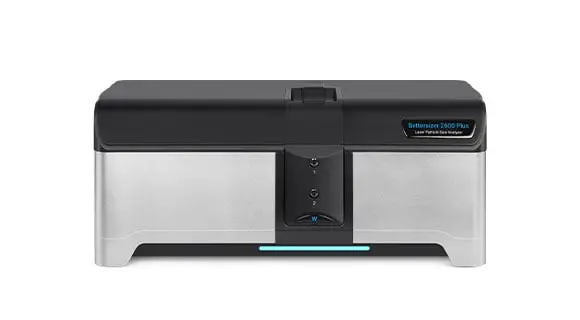
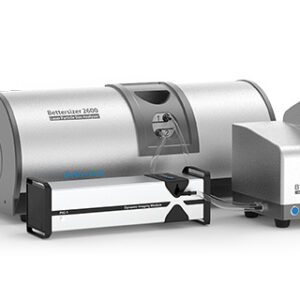
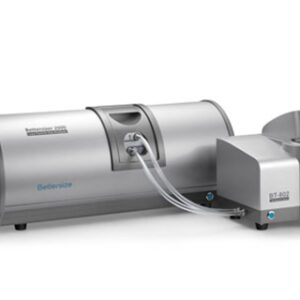
These versatile workhorses, like the Bettersizer 2600 and S3 Plus, utilize laser diffraction technology to measure particle size distributions across a broad range (0.02 µm to 2600 µm). Ideal for analyzing powders, suspensions, and emulsions, these analyzers provide fast, accurate results for routine quality control or research applications.

Dynamic Image Analyzers for Detailed Particle Morphology:

For detailed analysis of particle morphology alongside size distribution, Bettersize offers the BeVision D2. This advanced system captures high-resolution digital images of individual particles, allowing researchers to assess aspects like shape, aspect ratio, and particle size distribution with exceptional accuracy.

Nanoparticle Size and Zeta Potential Analyzers Instruments:

The BeNano 180 Zeta Pro caters specifically to the analysis of nanoparticles. This specialized instrument combines dynamic light scattering (DLS) technology for size determination with zeta potential measurement, a crucial parameter for understanding nanoparticle stability in suspension.

Online Analyzers for Particle Size Monitoring:

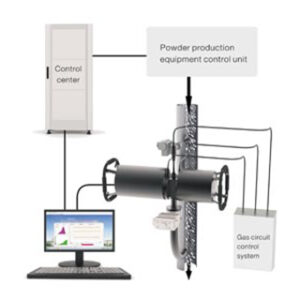
For real-time particle size monitoring in production lines, Bettersize offers the BT-Online1. This online analyzer seamlessly integrates with existing processes, providing continuous feedback on particle size distribution for optimal process control.

Monitoring and Correcting Particle Process Deviations

In industries where product quality and process efficiency are paramount, real-time monitoring of particle size distribution is essential. Particle size analysis techniques such as laser diffraction and image analysis can be integrated directly into processing lines, providing continuous measurement of particle size and distribution. This allows operators to detect deviations from the desired size distribution as soon as they occur.

By monitoring particle size in real time, manufacturers can quickly identify and address process changes that might affect product quality. For example, if the particle size distribution begins to drift outside of specification, adjustments can be made immediately to processing parameters, such as milling speed or feed rate, to bring the process back under control. This proactive approach reduces the risk of producing off-spec batches, minimizes waste, and ensures consistent product quality.

Continuous particle size measurement also supports process optimization, enabling fine-tuning of conditions to achieve the ideal size distribution for each product. By leveraging advanced analysis techniques, companies can maintain tight control over their processes, improve efficiency, and deliver high-quality products to their customers.

Applications of Particle Size Analysis

Particle size analysis plays a vital role in a wide range of industries and processes, helping manufacturers optimize product quality and process performance. In the pharmaceutical industry, understanding particle size distribution is crucial for ensuring drug efficacy, stability, and bioavailability. The right particle size can influence how quickly a drug dissolves and is absorbed by the body.

In food processing, particle size distribution affects the texture, appearance, and shelf life of products, making it a key factor in product development and quality control. Chemical manufacturers rely on particle size analysis to control reaction rates and yields, as the size and distribution of particles can impact the efficiency of chemical processes.

Materials science also benefits from precise particle size analysis, as the mechanical and thermal properties of materials often depend on the size distribution of their constituent particles. Techniques such as laser diffraction, dynamic light scattering, and image analysis are commonly used to measure particle size and distribution in powders, suspensions, and emulsions.

By understanding and controlling particle size distribution, manufacturers can improve product quality, enhance process efficiency, and reduce production costs, making particle size analysis an indispensable tool across a broad spectrum of industries.

Investing in a Trusted Particle Size Analyzer Supplier in Malaysia

By partnering with Bettersize Instruments and LabAlliance, researchers and quality control professionals gain access to a powerful suite of tools and expertise to precisely characterize the size and distribution of particles within their samples. Bettersize is your trusted particle size analyzer supplier in Malaysia, offering reliable instruments and exceptional service to meet all your particle sizing needs. Contact us today for more inquiries.

Showing all 5 results

Bettersizer 2600

Bettersizer 2600

Bettersizer 2600 Plus

Bettersizer 2600 Plus

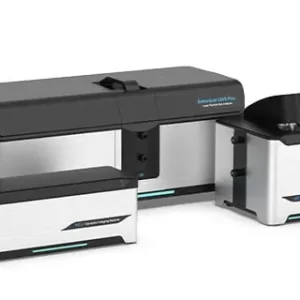
Bettersizer 2600 Plus combines laser diffraction and dual-camera dynamic imaging on one modular platform, delivering size and shape characterization across 0.02–3500 μm. Laser diffraction provides fast, repeatable particle size distributions using a 92-detector array and Mie/Fraunhofer models. Dynamic imaging captures high-speed particle images to quantify size and shape, with visual evidence for agglomerates, irregular particles, and oversized tails. With a modular design, Bettersizer 2600 Plus supports a broad selection of wet and dry dispersion units. This enables flexible setups for different sample types, volumes, and solvents, so one instrument can meet diverse applications and industries.

Bettersizer S3 Plus

Bettersizer S3 Plus

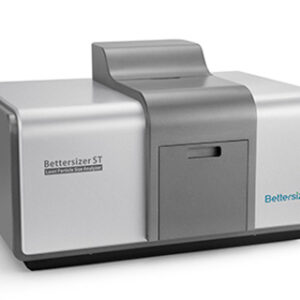
Bettersizer ST

Bettersizer ST

BT-Online 1

BT-Online 1