
Spectroscopy plays a vital role in modern laboratories by enabling rapid, non-destructive, and reliable material characterization. Spectroscopy techniques are a group of analytical methods that rely on the interaction of electromagnetic radiation with materials. As a quantitative scientific technique, spectroscopy is used to analyze the energy states of atoms and molecules and to identify spectral lines with precision. Enabled spectroscopy encompasses a range of methods for analyzing matter using electromagnetic radiation, including atomic, infrared, and nuclear magnetic resonance approaches.
Spectroscopy is the study of the absorption and emission of light and other radiation by matter, and is a branch of science concerned with the spectra of electromagnetic radiation as a function of its wavelength or frequency. It is integral to a variety of disciplines, including chemistry, physics, and astronomy. Spectroscopy can detect chemical pollutants and greenhouse gases in the environment. Non-destructive spectroscopic methods are used in forensic analysis to identify unknown materials found at crime scenes. Miniaturized spectrometers are increasingly used for field analysis in agriculture and disaster response. Techniques such as Time-Domain Nuclear Magnetic Resonance (TD-NMR) and Fourier Transform Near-Infrared Spectroscopy (FT-NIR) are widely adopted for quality control, process monitoring, and research, particularly where speed, simplicity, and minimal sample preparation are required.
At LabAlliance, we offer TD-NMR minispec mq series and FT-NIR spectroscopy solutions, supporting laboratories across food, polymers, chemicals, pharmaceuticals, palm oil, and biomass-related applications.
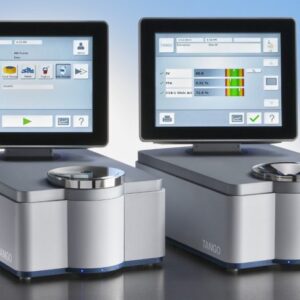
TD-NMR provides quantitative and structural information based on nuclear relaxation behavior, without the need for solvents, consumables, or extensive sample preparation. TD-NMR operates by applying radiofrequency pulses to samples placed in a magnetic field, generating nmr spectra that offer insights into molecular structure. NMR spectroscopy can be used to analyze the electronic environment of atomic nuclei, providing detailed information about molecular structure and dynamics. The minispec mq series is designed for routine and research environments, delivering fast and reproducible results.
Key Capabilities of TD-NMR minispec mq
Unlike high-field NMR, TD-NMR focuses on relaxation measurements (T₁, T₂) rather than chemical structure, making it ideal for routine QC and process monitoring.
Food & Edible Oils
Polymers & Materials
Pharmaceuticals & Chemicals
Palm Oil & Biomass
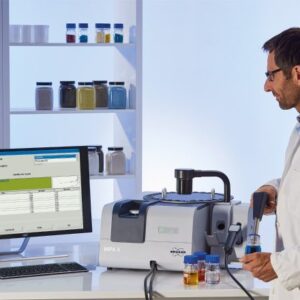
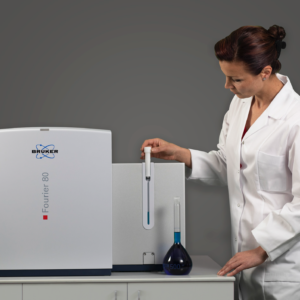
FT-NIR spectroscopy is a powerful tool for fast, non-destructive analysis of chemical and physical properties. As a type of vibrational spectroscopy closely related to IR spectroscopy, FT-NIR and FT-IR both measure absorbed light to identify molecular vibrations and chemical bonds in samples. Infrared spectroscopy, including FT-NIR and FT-IR, is commonly used for the identification and quantification of organic compounds. This enables laboratories to perform real-time or near-real-time measurements with little to no sample preparation.
Key Capabilities of FT-NIR
FT-NIR relies on chemometric models, allowing users to correlate spectral data with key quality parameters.
Food & Agriculture
Polymers & Chemicals
Pharmaceuticals
Biomass & Renewable Materials
When you’re working with materials at the nanoscale, understanding what makes them tick becomes crucial. That’s where spectroscopy comes in—it’s like having a powerful toolkit that lets you peek into the chemical structure and physical properties of nanoparticles without actually damaging them. The secret lies in watching how these tiny particles interact with electromagnetic radiation.
There are several spectroscopic techniques that researchers rely on, and each one tells a different part of the story:
These spectroscopic techniques give researchers the ability to understand how matter and electromagnetic radiation dance together at the nanoscale. This knowledge is essential whether you’re developing new nanoparticles, checking their stability, or trying to optimize their performance. When you need to assess physical properties or decode complex chemical structures, spectroscopy remains one of your most reliable allies in pushing nanoparticle research forward.
| Aspect | TD-NMR (minispec mq) | FT-NIR |
| Measurement Principle | Nuclear relaxation behavior | Molecular vibrational overtones |
| Sample Preparation | Minimal | Minimal |
| Destructive | No | No |
| Quantitative Analysis | Direct | Model-based (chemometrics) |
| Best For | Fat content, moisture, structure | Rapid screening, QC, fingerprinting |
| Analysis Speed | Minutes | Seconds |
Used together, TD-NMR and FT-NIR provide complementary insights, balancing direct quantification and rapid screening.
By combining robust spectroscopy platforms with LabAlliance’s application expertise, laboratories benefit from:
These solutions are ideal for laboratories seeking efficient, operator-friendly analytical tools without compromising data quality.
Spectroscopy techniques, including TD-NMR and FT-NIR spectroscopy, are often integrated into broader analytical strategies alongside:
Spectroscopy techniques are often combined with chromatography to analyze complex mixtures.
Energy-dispersive X-ray spectroscopy is used for the identification and quantification of elements in a sample.
Together, they enable comprehensive, efficient, and defensible material analysis.
Showing all 11 results

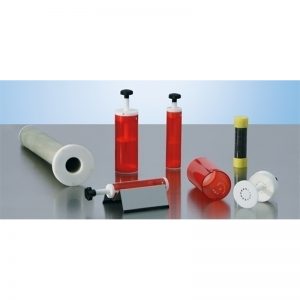
The new minispec LF110 can accommodate very obese rodents that weigh more than 1 kg. While being able to analyse those objects, the LF110 has been designed to also measure small sample amounts, like new-born mice or organs. This is possible by combining proprietary solutions with an as high as possible magnetic field strength. While keeping the footprint and housing the same, the weight range of this new system has been expanded as compared to the well-established LF90II. Therefore the LF110 really offers the largest sample weight range of Bruker`s comprehensive LF-series.

Bruker’s minispec LF50 Body Composition Analyzer provides an unparalleled precise measurement of Lean Tissue, Fat, and Fluid in live mice on a bench-top platform.
The LF50 combines optimal footprint with high sensitivity and flexibility. Further, thanks to Bruker’s unique Plug-and-Play probe concept, cleaning and exchange of the NMR probe is a matter of seconds. The whole body analysis requires a optimal design of the MR system such that small and large animals (or even biopsies) are equally well analyzed.
All these requirements are perfectly matched by the minispec LF50. Key to its success are the unrivaled measurement frequency of 7.5 MHz and the encapsulated zero maintenance electronics.
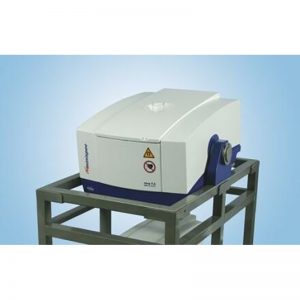
The minispec LF50H version provides a convenient horizontal access extending the weight range assessable for Body Composition analysis with no compromise in signal-to-noise.
This is because of the comparable high magnetic field (7.5 MHz) used to generate the signal required for reproducible and sensitive operation.

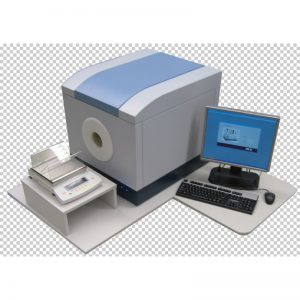
Bruker’s all-new 2nd generation minispec LF90II Body Composition Analyzer provides the new benchmark for precise measurement of Lean Tissue, Fat, and Fluid from lightweight newborns to obese elder rats.

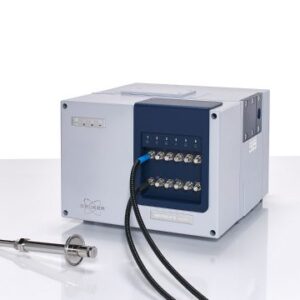

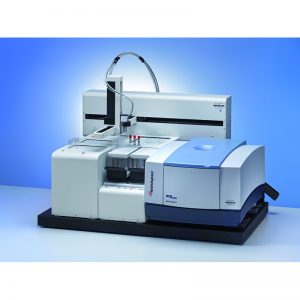
This new easy to use, cost-effective system brings sample automation to routine minispec applications, including complex Solid Fat Content (SFC) analysis.
Now, thanks to quick sample exchange times that maximize throughput and increased reliability in minispec measurements, productivity is significantly boosted.
The minispec Sample Automation system is available as a standalone accessory to existing minispec systems from the mq and mq-one Series, or as a packaged system with a new minispec spectrometer.

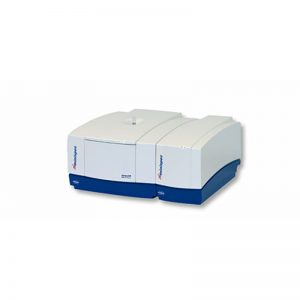
The magnet NMR minispec mq series offers the most comprehensive range of measurement frequencies known today, ranging from 7.5 MHz for samples with large diameters, via 10 MHz, 20 MHz and 40 MHz, to the unparalleled mq60 with 60 MHz operating frequency.
While the minispec mq-one series features the best possible performance-to-footprint ratio for common QC applications, the minispec mq series offers multi-application support and a wide range of upgrade features, like tool-free exchangeable probes, variable temperature NMR probes and pulsed field gradient systems.

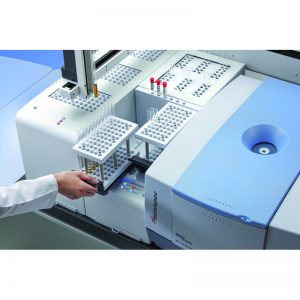
The mq-one is the newest addition to the minispec mq series TD-NMR systems. The award winning mq series covers a wide range of applications and offers expansion capabilities for both routine NMR quality control and R&D. The mq-one takes the minispec mq series product line further into the realm of routine industrial applications.