
The Role of Zeta Potential in Colloidal Stability

In the world of colloids and suspensions, stability is paramount.

Whether it’s ensuring drug uniformity in pharmaceuticals or maintaining the consistency of paints, tiny particles need to stay dispersed for proper function. This is where zeta potential comes in, and zeta potential analyzers become crucial tools for researchers. Zeta potential is a scientific term used to describe the electrokinetic potential at the slipping plane in colloidal systems, and it is one of the fundamental parameters for understanding and controlling colloidal stability.

Introduction to Colloidal Stability

Colloidal stability is fundamental to the performance and longevity of many products and processes, from pharmaceuticals to paints and food systems. In colloidal dispersions, the stability of suspended particles depends on the delicate balance between attractive and repulsive forces. Zeta potential is a key factor in this balance, representing the electrical potential at the slipping plane—the boundary that separates the mobile fluid from the fluid attached to the particle surface. 

The zeta potential value, measured in millivolts, reflects the degree of electrostatic repulsion between similarly charged particles. A high zeta potential magnitude, whether positive or negative, means that particles repel each other strongly, helping to prevent aggregation and maintain a stable dispersion. Conversely, when the zeta potential is low, attractive forces can dominate, leading to flocculation or coagulation as particles come together. Understanding and controlling zeta potential is therefore essential for predicting and managing the stability of colloidal dispersions in a wide range of applications.

What is Zeta Potential?

Zeta potential refers to the electrical charge surrounding a particle in a liquid suspension. In scientific literature, zeta potential is often denoted by the Greek letter ζ (zeta). Particles can acquire a charge due to various factors, including surface chemistry and interactions with the surrounding liquid. This charge creates a repulsion force between particles, preventing them from clumping together and settling out of suspension.

Zeta potential (ζ potential) is an electrokinetic potential measured at the slipping plane and serves as an indirect measure of the surface charge of particles. It is determined experimentally using techniques such as electrophoresis. The presence of multiple charged species in a sample can result in a distribution of zeta potentials with multiple peaks.

The magnitude of the zeta potential indicates the degree of this repulsion force. Higher absolute values (positive or negative) signify greater stability, while values close to zero suggest potential aggregation.

Factors Affecting Zeta Potential

The main factors affecting zeta potential include the dispersant pH, ionic strength (salt concentration), and the concentration of small molecule additives. The properties of the bulk solution, including its ionic strength and composition, influence the thickness of the electrical double layer, which is characterized by the Debye length. The ratio of particle radius to Debye length is important for selecting the appropriate theoretical model for calculating zeta potential. When measuring zeta potential and applying theoretical models, the Henry function is used in the Henry equation for calculating zeta potential from electrophoretic mobility. Zeta potential values are often derived from experimental data collected during measurements. With a high zeta potential, the repulsive force between particles is strong, and the system tends to be stable. Conversely, with a low zeta potential, the repulsive force is weak, making particles easy to agglomerate or flocculate, leading to poor system stability.

Electrokinetic Phenomena and Streaming Potential

Electrokinetic phenomena are central to the measurement and understanding of zeta potential in colloidal dispersions. One of the most common methods is electrophoresis, where an electric field is applied across a dispersion, causing charged particles to migrate toward the electrode of opposite charge. The speed at which these particles move is directly related to the magnitude of their zeta potential, providing a way to measure zeta potential experimentally. Another important phenomenon is streaming potential, which is particularly useful for measuring zeta potential in porous materials or flat surfaces. In this method, an electric potential difference is generated when an electrolyte solution is forced through a porous plug or across a flat surface, causing ions to move and create a measurable streaming potential. By analyzing this potential difference using the Helmholtz-Smoluchowski equation, researchers can calculate the zeta potential. These electrokinetic phenomena are essential tools for probing the behavior of colloidal dispersions and for accurately measuring zeta potential in a variety of systems.

Light Scattering Principles in Zeta Potential Analysis

Light scattering techniques are at the heart of modern zeta potential analysis, especially through methods like electrophoretic light scattering (ELS). In ELS, a laser beam is directed at a colloidal sample while an electric field is applied, causing charged particles to move. As these particles migrate, they induce a frequency shift or phase shift in the scattered light, which is directly related to their electrophoretic mobility. By measuring this frequency shift, the electrophoretic mobility can be determined and then converted into a zeta potential value using established theoretical models such as the Smoluchowski equation. Additionally, dynamic light scattering (DLS) is often used alongside ELS to provide detailed information about particle size and distribution. By combining ELS and DLS, researchers gain a comprehensive view of the colloidal system, including both zeta potential and particle size, which are critical for understanding and controlling stability behavior.

Dynamic Light Scattering: Complementary Insights

Dynamic light scattering (DLS) is a powerful analytical technique that complements zeta potential measurements by providing detailed information on particle size and distribution within colloidal dispersions. DLS works by analyzing the fluctuations in the intensity of scattered light caused by the random Brownian motion of particles suspended in a liquid. These fluctuations are used to calculate the hydrodynamic radius, particle size distribution, and polydispersity index of the sample. DLS is especially valuable for characterizing nanoparticles, proteins, and other small particles where precise size information is crucial. When used in conjunction with zeta potential analysis, DLS enables researchers to gain a more complete understanding of the colloidal system, helping to optimize formulations and predict stability behavior with greater accuracy.

Analyzing Zeta Potential with Electrophoretic Light Scattering (ELS)

ELS relies on the movement of charged particles in an applied electric field (also referred to as an applied electrical field). When an applied electrical field is applied to the suspension, the charged particles migrate towards the oppositely charged electrode. This process typically takes place in a capillary cell, where the applied voltage across the cell must be carefully controlled. For certain samples, higher voltages may be necessary to achieve accurate results, but these should be increased gradually to avoid measurement instability. As the particle moves under the influence of the electrical field, its electrophoretic velocity is measured, which is directly related to particle mobility and the particle’s charge and size.

Zeta potential analyzers use a laser beam to track the movement of the particles and extract their electrophoretic velocity from the scattered light. Rigorous electrokinetic theories have been developed to improve upon earlier models for calculating zeta potential. The Smoluchowski equation, originally developed in 1903, is commonly used to convert this velocity into the zeta potential value; however, Smoluchowski’s theory neglects surface conductivity and is most accurate for large particles relative to the Debye length.

Colloid-Dependent Properties and Stability Behaviour

The stability behavior of colloidal dispersions is governed by a range of colloid-dependent properties, including zeta potential, particle size, and surface conductivity. Zeta potential serves as a key factor in determining how particles interact with each other and with the surrounding medium. By measuring zeta potential, researchers can assess the likelihood of phase separation, flocculation, or coagulation in colloidal systems. Particle size and surface conductivity also play significant roles, influencing how particles move and interact under different conditions. Understanding the interplay between these properties is essential for designing stable colloidal systems, whether for drug delivery systems, food processing, or industrial coatings. By carefully measuring and controlling zeta potential and related parameters, scientists and engineers can tailor the stability and performance of colloidal dispersions to meet specific application requirements.

Applications of Zeta Potential Analysis

Zeta potential analysis offers a multitude of benefits across various industries:

  • Stability Assessment: By measuring zeta potential, scientists can predict the stability of suspensions and emulsions. A high absolute value of zeta potential indicates a stable system, while a low value suggests potential aggregation or flocculation.
  • Formulation Optimization: In fields like pharmaceuticals and cosmetics, zeta potential analysis helps optimize formulations for stability and functionality. This is especially important for ensuring the proper distribution and stability of active ingredients in cosmetic formulations, such as emulsions, creams, and lotions, to enhance product efficacy and shelf life. By understanding how factors like pH or ionic strength affect zeta potential, researchers can develop formulations with optimal particle interactions.
  • Coagulation Control: Zeta potential measurements are crucial for controlling coagulation processes in wastewater treatment or papermaking. By adjusting the concentration of coagulants, the desired degree of particle aggregation can be achieved.
  • Nanomaterial Characterization: Zeta potential analysis plays a vital role in characterizing nanomaterials. It is relevant for most systems containing dispersed particles, including metal oxides, proteins, and emulsions. Understanding the surface charge of nanoparticles is essential for applications like drug delivery and targeted therapies. Additionally, understanding the interfacial double layer is essential for interpreting zeta potential measurements and optimizing nanomaterial stability.

Bettersize Zeta Potential Measurement Instruments: Precision for Accurate Results

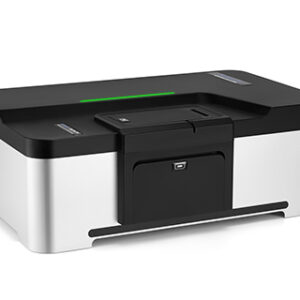
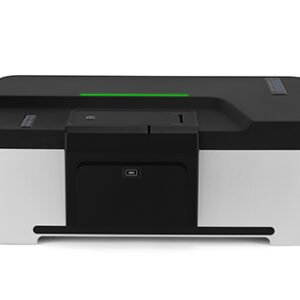
Bettersize offers a comprehensive suite of solutions for measuring zeta potential. Their instruments, the BeNano series, cater to researchers and industries working with nanoparticles and colloidal suspensions. By understanding the capabilities of each BeNano model, researchers can select the instrument that best equips them to delve into the fascinating world of zeta potential and unlock a deeper understanding of their colloidal systems.

Choosing the Right BeNano Zeta Potential Analyzer Model:

The ideal BeNano model depends on your specific needs and research focus. Here’s a quick guide:

  • Basic zeta potential and particle size analysis: BeNano
  • Enhanced sensitivity for low mobility samples: BeNano 90 Zeta
  • Comprehensive analysis with PALS, SLS, and micro-rheology, suitable for regulated environments: BeNano 180 Zeta Pro.

For personalized guidance in selecting the optimal model for your needs, we encourage you to connect with our dedicated team of product and application specialists. They are available to provide expert advice and assistance, ensuring you choose the ideal instrument tailored to your specific requirements.

Investing in a Trusted Zeta Potential Analyzer Supplier in Malaysia

By partnering with Bettersize Instruments and LabAlliance, researchers and quality control professionals gain access to a powerful suite of tools and expertise to precisely measure and understand the zeta potential and particle size of their colloidal systems. Bettersize is your trusted zeta potential analyzer supplier in Malaysia, offering reliable instruments and exceptional service to meet all your particle measurement needs. Contact us today for more enquiries.

Showing all 2 results

BeNano 180 Zeta Pro

BeNano 180 Zeta Pro

BeNano 90 Zeta

BeNano 90 Zeta