Contact Angle Analyzer: Surface Insights at a Drop’s Edger

The contact angle analyzer is designed to measure the contact angle formed between a liquid droplet and a solid surface.Interface science is the field that studies surface and interface phenomena, including contact angle measurements.

Read More
Close

This angle is crucial in understanding the wetting properties of the liquid surface, which is the interface where the measurement occurs and impacts various industrial processes and applications. This seemingly simple measurement unlocks a treasure trove of information about a material’s surface properties.
The behavior of liquid molecules at the interface determines the contact angle and influences surface interactions.

Revealing Surface Properties with Contact Angle Measurement

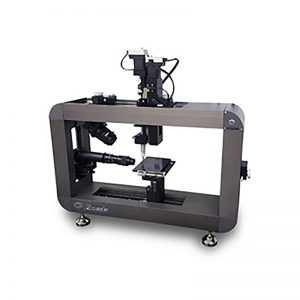
The contact angle analyzers typically operate by placing a droplet of a known liquid onto the surface of interest and then capturing an image of the droplet. The sessile drop contact angle is a common technique for measuring wettability, and the contact angle method is widely used for assessing surface properties. Advanced image processing algorithms analyze this image to precisely calculate the contact angle at the point where the droplet meets the surface. This measurement provides valuable insights into surface tension, adhesion, and surface energy of the material under investigation.

Solid Surfaces and Wettability

The wettability of a material’s solid surface is a fundamental property that determines how liquids interact with it, and is most commonly characterized by the contact angle formed between a liquid drop and the solid surface. This angle is a direct indicator of the surface free energy: a low contact angle suggests high surface free energy and strong wetting, while a high contact angle points to low surface energy and poor wettability.

Several factors influence the contact angle and, consequently, the wettability of solid surfaces. Surface roughness and surface texture can dramatically alter how a liquid spreads or beads up, as even small grooves or irregularities can trap air or create excess energy at the interface. The chemical nature of the surface, specifically its polar and dispersive components also play a crucial role. Polar interactions and dispersive interactions between the liquid and the solid substrate contribute to the total surface energy, affecting how the liquid drop behaves.

The equilibrium contact angle, often described by the Young equation, provides a theoretical framework for understanding the balance of forces at the solid-liquid-gas interface. This equation relates the surface tension of the liquid, the surface energy of the solid, and the interfacial tension between the two, offering insight into the wetting properties of ideal surfaces.

In practical terms, water contact angle measurements are widely used to assess the wettability of solid surfaces. A lower water contact angle typically indicates a higher surface free energy and better wetting, which is desirable in applications like coating, adhesion, and biomedical device manufacturing. However, real surfaces are rarely ideal. Surface roughness, contamination, and even microscopic air pockets can influence the measured contact angle, making careful surface preparation and cleanliness essential for accurate contact angle measurements.

Beyond the static contact angle, dynamic measurements such as advancing and receding contact angles provide deeper insight into surface behavior. The difference between the advancing and receding contact angles known as contact angle hysteresis can reveal information about surface heterogeneity, roughness, and the presence of contaminants. Stable contact angles and low hysteresis are often indicators of smooth, chemically homogeneous surfaces, while large hysteresis may signal surface defects or variable surface energies.

To tailor surface properties for specific applications, various surface treatments such as plasma treatment or specialized coatings are employed. These treatments can modify the polar and dispersive components of the surface energy, enabling precise control over wettability and adhesion. By understanding and manipulating these factors, it is possible to achieve consistent, reliable contact angle results and optimize the performance of solid surfaces across a wide range of industries.

In summary, the interplay between surface energy, contact angle, and wettability is complex but critical for material performance. Through careful control of surface properties and the use of advanced surface treatments, industries can harness the full potential of solid surfaces for innovative applications.

Critical Role of Contact Angle Analyzers

Contact angle analyzers play a critical role in advancing research and development across various disciplines by providing quantitative data on surface interactions. They facilitate precise control and optimization of material properties essential for enhancing product performance, durability, and efficiency in diverse industrial applications.

By unraveling the mysteries of surface interactions, the contact angle analyzer empowers researchers and engineers across various disciplines to develop innovative materials and technologies.

Contact Angle Analyzer Applications: A Spectrum of Surface Science

Contact angle analyzers find widespread use across numerous industries:

  • Material Science and Research: They are indispensable for studying surface modifications, coatings, and treatments. Researchers use contact angle measurements to assess the effectiveness of hydrophobic or hydrophilic coatings, surface roughness effects, and adhesion properties.
  • Quality Control and Manufacturing: Industries such as automotive, electronics, and aerospace employ contact angle analyzers to ensure consistent surface properties of materials used in manufacturing processes. This helps in optimizing product performance and durability.
  • Medical and Pharmaceutical: Contact angle analysis is crucial in the development of medical devices, drug delivery systems, and biomaterials. It assists in understanding how liquids interact with surfaces in biological environments, influencing biocompatibility and functionality.
  • Cosmetics and Personal Care: Formulators use contact angle analyzers to evaluate the spreading behavior of liquids on skin or hair surfaces. This aids in developing products like lotions, shampoos, and makeup that provide desired application and sensory characteristics.
  • Environmental and Sustainability: Analyzing contact angles helps assess the surface properties of materials used in environmental applications such as oil-water separation, soil hydrophobicity, and anti-fouling coatings.
  • Energy Research: Developing efficient solar cells, fuel cells, and other energy technologies hinges on optimizing surface properties. Contact angle analysis aids in tailoring surfaces for optimal performance.
  • Microfluidics: The miniaturization of fluids in microchannels requires precise control of wettability. Contact angle analysis helps ensure proper fluid flow and manipulation in these tiny systems.

Surface Electro Optics (SEO): Unveiling Surface Chemistry with Contact Angle Analysis Instruments

Surface Electro Optics (SEO), a leading Korean innovator since 1998, stands out for its expertise in surface analysis technology. Their core offering in contact angle analysis revolves around the SEO Phoenix Series, a range of instruments designed to deliver precise and user-friendly measurements of surface wettability.

Advantages of SEO Phoenix Contact Angle Measurement Tools

  • Diverse Models: The Phoenix Series caters to various needs, with models like the Phoenix MT offering advanced features for research applications and the portable Phoenix-Smart (SEO) ideal for field measurements.
  • Automated Analysis: SEO’s instruments boast software-controlled drop volume adjustment, ensuring consistent and repeatable results while minimizing operator error.
  • High-Resolution Imaging: Equipped with high-resolution cameras, the Phoenix Series captures detailed images of the droplet profile, enabling accurate contact angle calculations.
  • Advanced Features: Several models offer functionalities like:
  • Dynamic Contact Angle Measurement: Tracks the advancing and receding contact angles, providing a more comprehensive picture of surface interactions.
  • Surface Energy and Work of Adhesion Calculation: Extracts valuable insights into the energetic interactions between the liquid and the solid surface.
  • Smart Capture for Super Hydrophilic Materials: Optimizes image capture for challenging surfaces with high wettability.

Investing in the Right Contact Angle Analyzer Supplier in Malaysia

Partnering with SEO and LabAlliance ensures that you have access to cutting-edge contact angle analyzers in Malaysia, backed by reliable instruments and exceptional service. Explore the range of SEO Phoenix Series contact angle analyzers to find the perfect measurement tool for your specific needs and applications. For more enquiries about our comprehensive contact angle analyzer instruments, contact us here.

Showing all 6 results

Phoemix-MT (M, A, T)

Phoemix-MT (M, A, T)

Worlds First: The New Stages That Define Performance!!

A New Level of designing performance and Flexibility

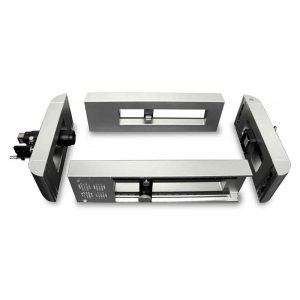
It is the world’s first model that can be used by turning the equipment, the individual modules can be separated, and the length of each main frame can be selected to change the model to suit almost all samples.

Phoenix-Alpha (A)

Phoenix-Alpha (A)

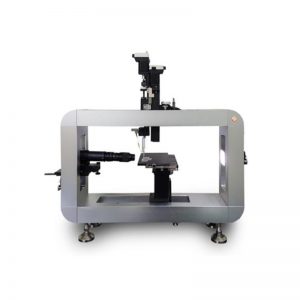
The Phoenix Alpha is lighter and has a smaller footprint than the Phoenix 300 series but has all functions needed for contact angle analysis.

The Phoenix Alpha was specifically upgraded based on many user’s inputs. It is easy, simple compact and user friendly designed. The system has a special designed optical system of reducing the light scattering and mounting an easy camera all-direction adjustment. The Phoenix Alpha is a valuable tool for on the spot research, QC and universities and training.

Phoenix-I (Portable)

Phoenix-I (Portable)

The Phoenix series is designed to offer the flexibility required for QA. R&D and engineering process development. The Phoenix-I is a quite simple and virtually any measure size without sample cutting sample cutting preparation. Light-weight means simple control device and simple handling. Phoenix-I adopted USB type camera. Easily connect to laptop and desktop computer with Surfaceware software.

Phoenix-Mini

Phoenix-Mini

The Phoenix Mini is specially developed with small footprint ideally for QA/QC work. Phoenix Mini portability combined with ease of measurement is ideal for routine measurement for surface treatment and cleanliness studies. The Phoenix Mini has a pre-aligned fixed optical system that eliminates the need to make focus adjustment. The liquid is dispensed using a precise manual system for small drop volume and with interchangeable tip size. The backlight system employed by the Phoenix Mini is designed to improve image quality which helps contact angle analysis.

Phoenix-Pico/Nano

Phoenix-Pico/Nano

The SEO phoenix PICO / Nano-liter is a drop shape analysis system specially designed and optimized for extremely small samples, including BGA (Ball Grid Array), hair, fibre, textile and biological applications.

Phoenix-Smart (M, A)

Phoenix-Smart (M, A)

The Phoenix Smart series is designed to offer the flexibility required for QA. R&D and engineering process development. The Phoenix-Smart (M.A.T) has been specially designed to be an upgradable and portable device that is easy and convenient to use. The Phoenix-Smart(M.A.T) can virtually any sample size without sample cutting preparation. Light-weight means simple control device and simple handling. Phoenix-Smart(M.A.T) adopted USB type camera. Easily connect to laptop and desktop computer with Surfaceware software.