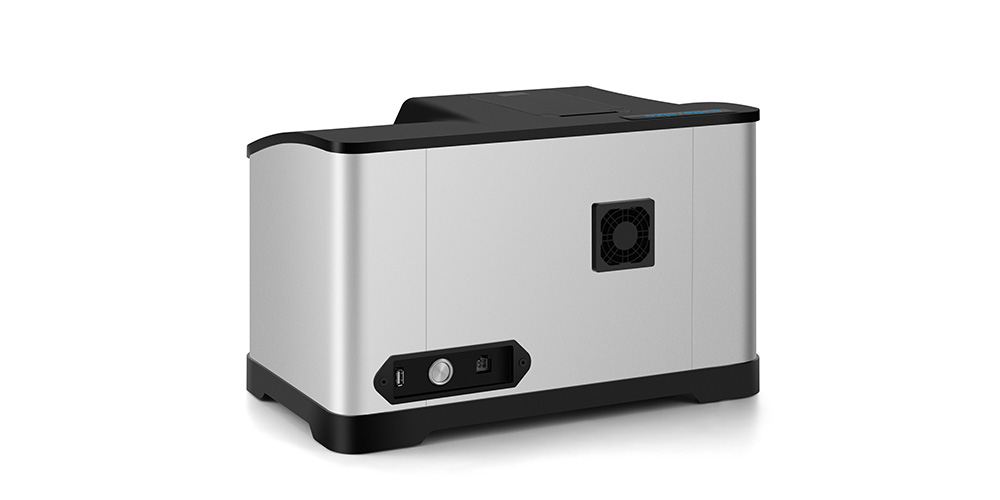
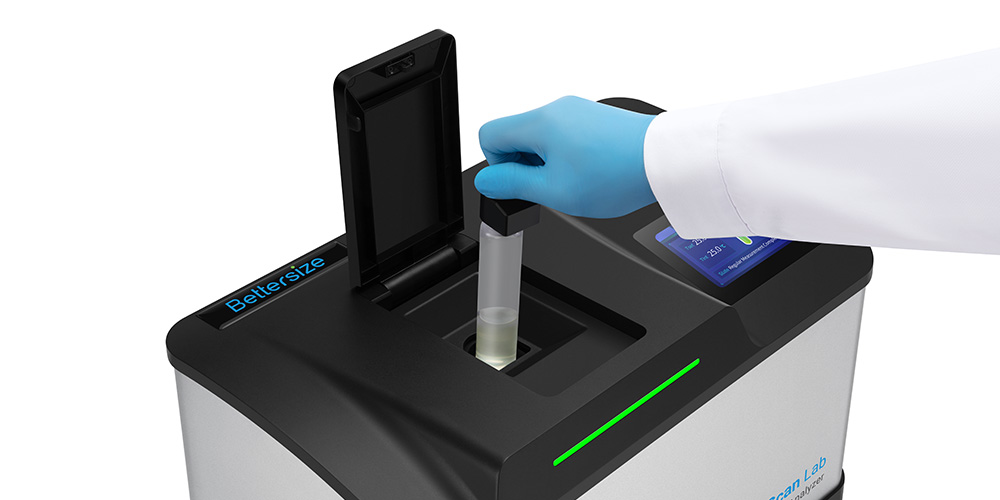
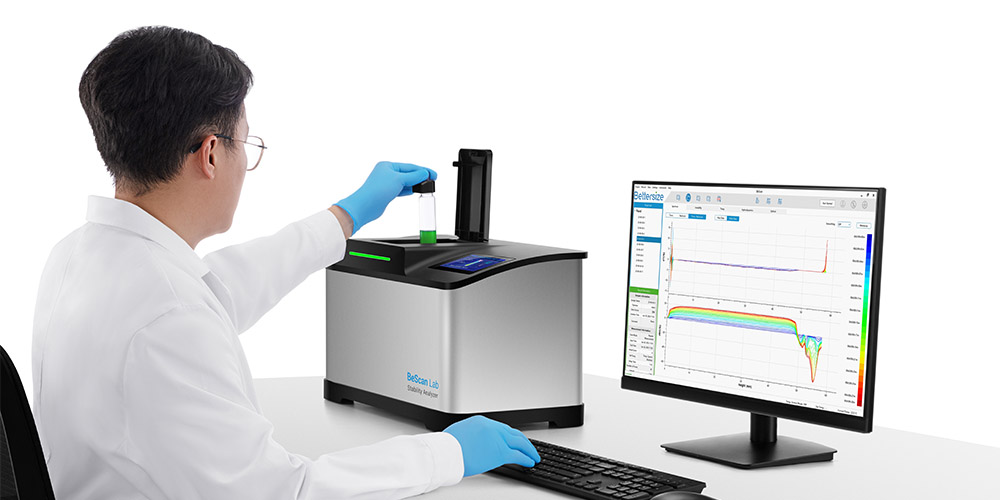
Description
What BeScan Lab+ Provides?
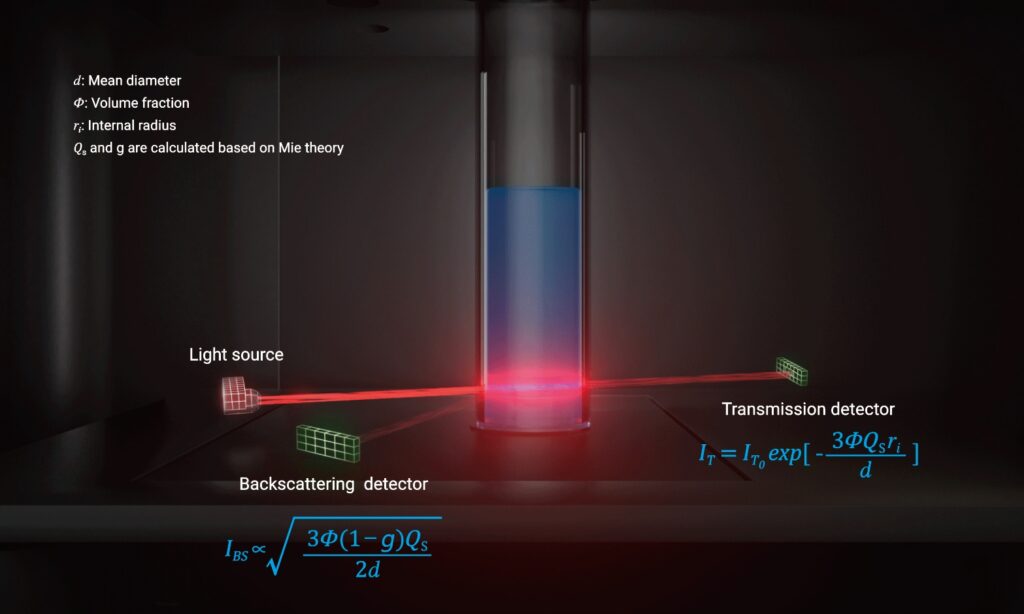
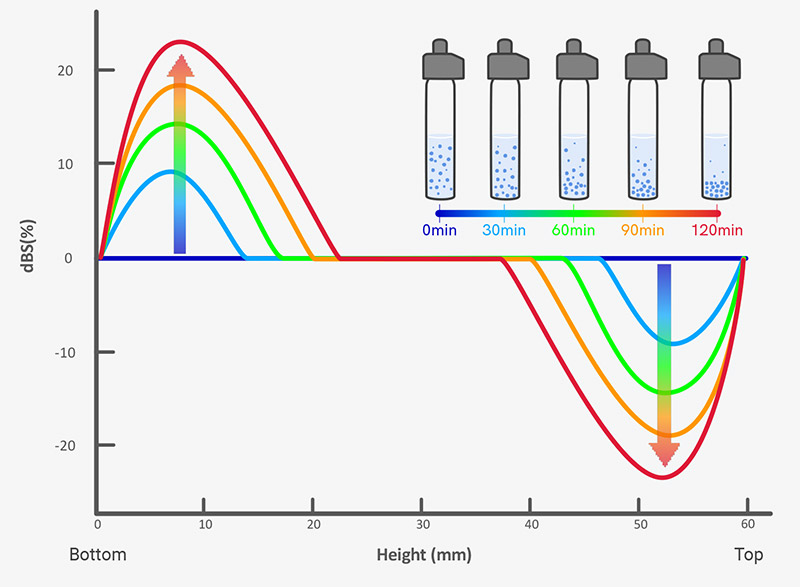
- Backscattering and Transmission Profiles
- lnstability Index (lus)
- Particle Size and Particle Size Distribution
- Homogeneity Index
- Hydrodynamic Analysis
- Kinetic Parameters
- Photon Mean Free Path Analysis
- AI-Powered Analysis
Features & Benefits
Native-State Analysis
Non-Destructive measurement
Preserves the sample’s original state with non-contact, dilution-free, and shear-free analysis.
Exceptional Concentration Range
Accurately measures sample dispersions from very dilute up to 95% volume fraction.
Broad Particle Size Range
Supports particle sizes from 0.01 to 1,000 μm, enabling reliable analysis of both nano- and micro-scale dispersions.
High-Precision & High-Throughput Hardware
Ultra-Sensitive Optical System
Achieves up to 200× greater sensitivity than visual inspection, enabled by precise 20 μm vertical scanning step.
Scalable, High-Throughput Testing
Supports simultaneous connection of up to 10 units, dramatically increasing testing capacity and efficiency.
Advanced Temperature Control
Features a wide operating range from 10 °C below ambient up to 80 °C, ensuring reliable performance under controlled thermal conditions.
Intelligent Data Analysis & Comprehensive Profiling
Quantitative Stability Metrics
Utilizes Instability (IUS) and Homogeneity (RSD) indices to precisely quantify stabilization and destabilization kinetics.
Mechanism & Particle Size Analysis
Identifies instability mechanisms (e.g., creaming, sedimentation) while delivering real-time, in-situ particle size distribution (PSD) analysis.
AI-Powered Diagnostics & Traceability
AI-driven analysis diagnoses root causes of instability and recommends formulation improvements, supported by barcode-based sample tracking for streamlined data management.
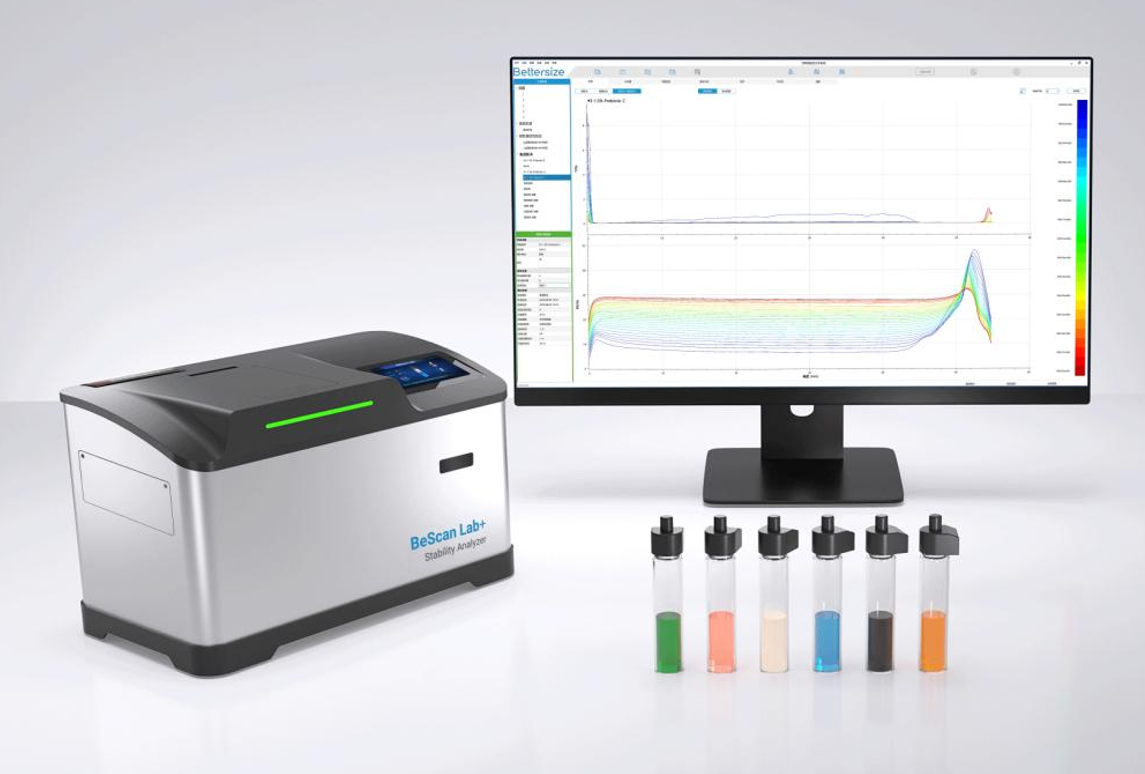
AI-Driven Instability Diagnosis
Make complex data easier to interpret — and faster to act on.
Interpreting stability data traditionally relies on experience, time, and consistent expertise across teams. The BeScan Lab+ addresses these challenges with an integrated AI-powered interpretation engine that transforms complex optical data into clear, decision-ready insight.
By combining signal evolution patterns with industry context and sample type, the system automatically identifies likely instability behaviors and supports root-cause analysis. This reduces reliance on manual interpretation and enables teams to reach conclusions faster, more consistently, and with greater confidence.
What AI Brings to Your Workflow
- Faster, more intuitive data interpretation
- Standardized analysis across users and teams
- Reduced dependence on expert-only judgment
- More efficient formulation screening
- Stronger support for optimization and QC decisions
Examples of AI-Identified Instability Behaviors
Droplet coalescence in cosmetic emulsions
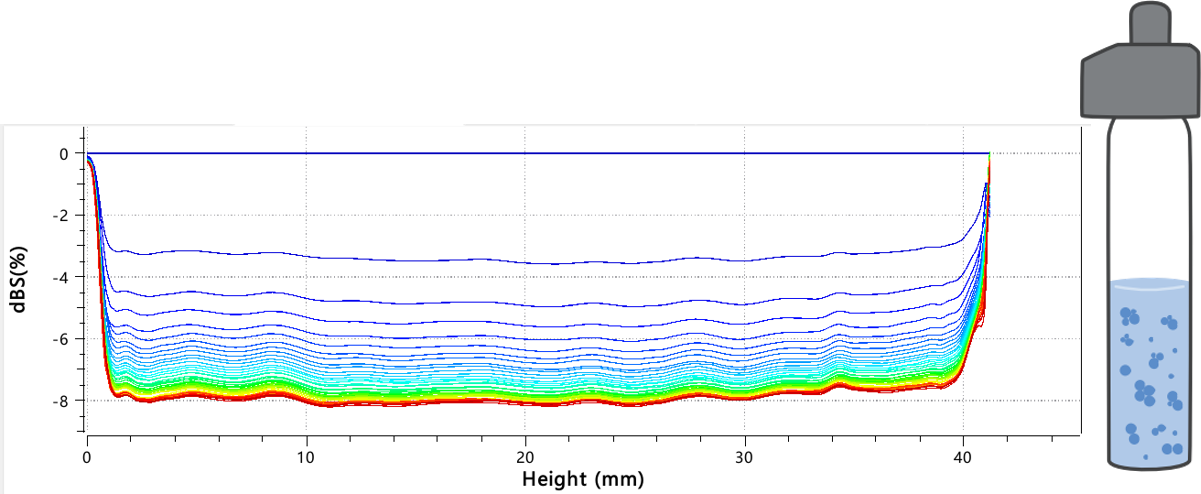
AI Analysis
Instability Index | Total: 7.0 / Bottom: 6.7 / Middle: 7.4 / Top: 6.8 |
Phenomenon | Aggregation, both bottom and top concentrations stable, but particle flocculation / aggregation occurs within the system. |
Sedimentation and agglomeration in CMP slurries
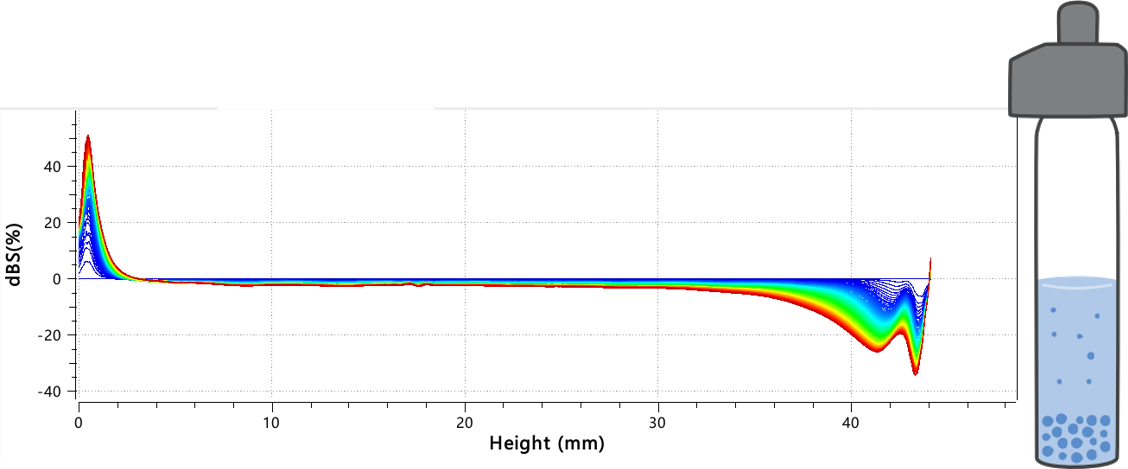
AI Analysis
Instability Index | Total: 4.0 / Bottom: 3.2 / Middle: 1.7 / Top: 7.1 |
Phenomenon | Sedimentation with Top Clarification and Aggregation, bottom concentration increased, top concentration decreased, accompanied by particle aggregation. |
Creaming in food emulsions
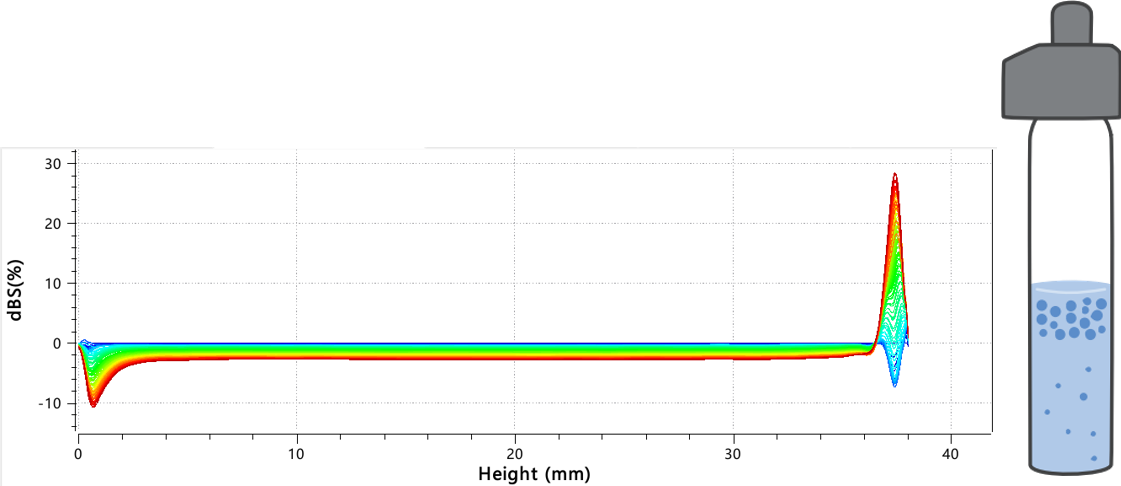
AI Analysis
Instability Index | Total: 1.5 / Bottom: 1.5 / Middle: 1.3 / Top: 2.0 |
Phenomenon | Bottom Clarification with Creaming and Aggregation, bottom concentration decreased, top concentration increased, accompanied by particle aggregation. |
The BeScan Lab+ supports the entire product lifecycle by helping teams detect risk earlier, optimize faster, and control quality with greater confidence. Stability is not a single checkpoint. It is a continuous challenge that directly impacts development speed, manufacturing consistency, shelf-life reliability, and in-use performance. The BeScan Lab+ enables proactive, quantitative, and actionable stability management — from raw material selection to end-user application.
Full Lifecycle Stability Solutions
Formulation Development
Raw Material Screening & Formulation Optimization
Typical challenge
Too many variables, too many formulation candidates, and heavy reliance on slow, subjective visual comparison.
What the BeScan Lab+ reveals
Early-stage stability differences between raw materials, suppliers, additive systems, and formulation ratios – enabling faster screening and smarter formulation decisions.
Quality Control & Process Optimization
Batch Consistency and Release Testing
Typical challenge
Changes in process parameters or batch variability can compromise long-term stability, even when products appear acceptable in the short term.
What the BeScan Lab+ reveals
Subtle stability differences driven by process conditions such as mixing intensity, emulsification time, and temperature – supporting robust process control and batch-to-batch consistency.
Storage & Transport Simulation
Shelf-Life Prediction & Environmental Stress Testing
Typical challenge
Storage and transport conditions can trigger separation, sedimentation, or structural change over time.
What the BeScan Lab+ reveals
How instability develops under different temperature and time conditions, enabling realistic simulation of storage, transport, and shelf-life scenarios.
Application Performance
Redispersibility & In-Use Performance
Typical challenge
A product may remain stable during storage but fail to redisperse or perform as expected during real-world use.
What the BeScan Lab+ reveals
Whether a system can redisperse effectively after shaking, dilution, or sonication – ensuring consistency and performance at the point of application.
Integrated Stability Platform
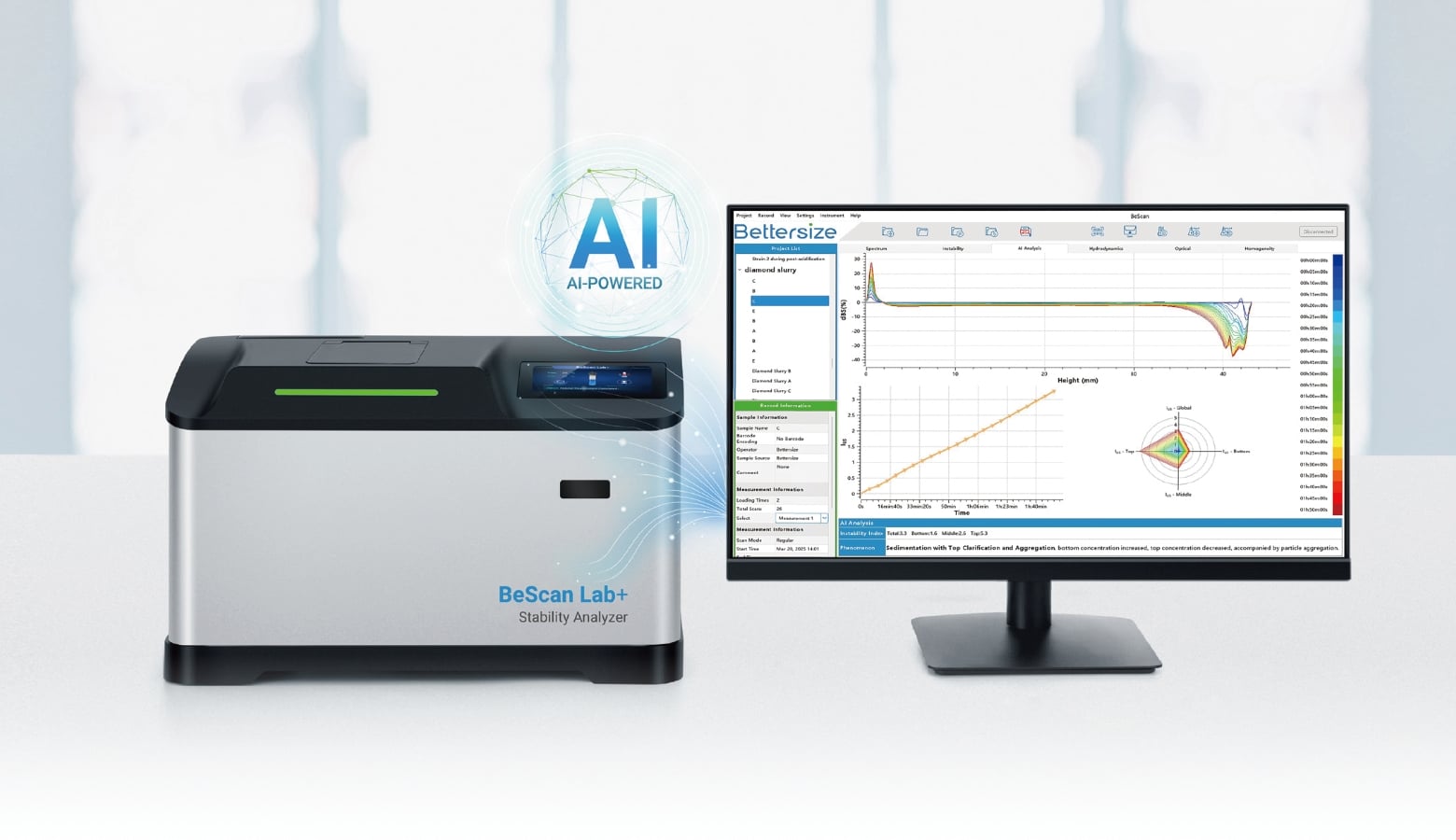
The BeScan Lab+ also integrates with the broader Bettersize portfolio to deliver a deeper, more connected understanding of both internal and external stability factors. When combined with BeNano, Bettersizer, BetterPyc 380, BeSEC, and BeVision, users can build a comprehensive and data-driven stability workflow spanning formulation, processing, structure, and performance.