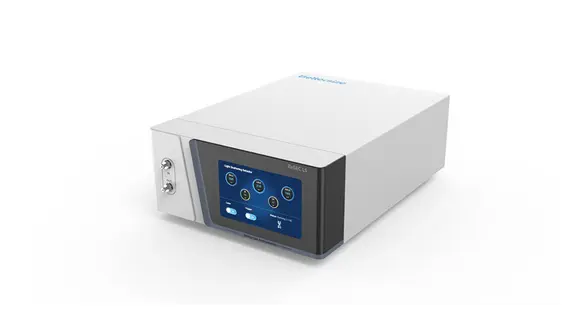
Description
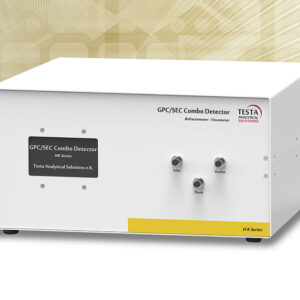
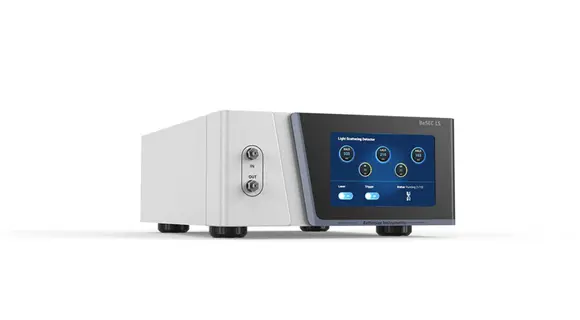
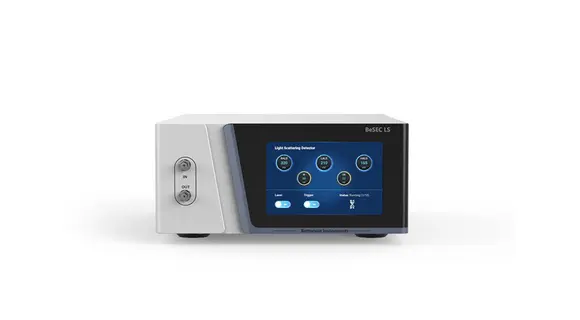
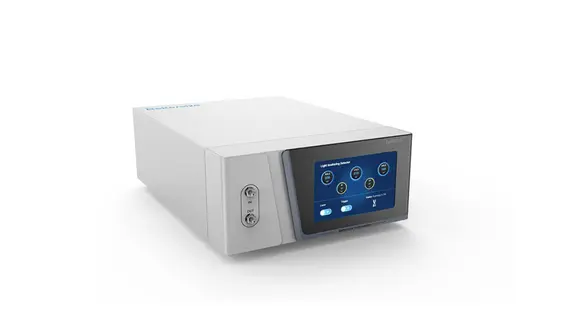
Bettersize BeSEC – Advanced Light Scattering Detector for SEC/GPC Systems
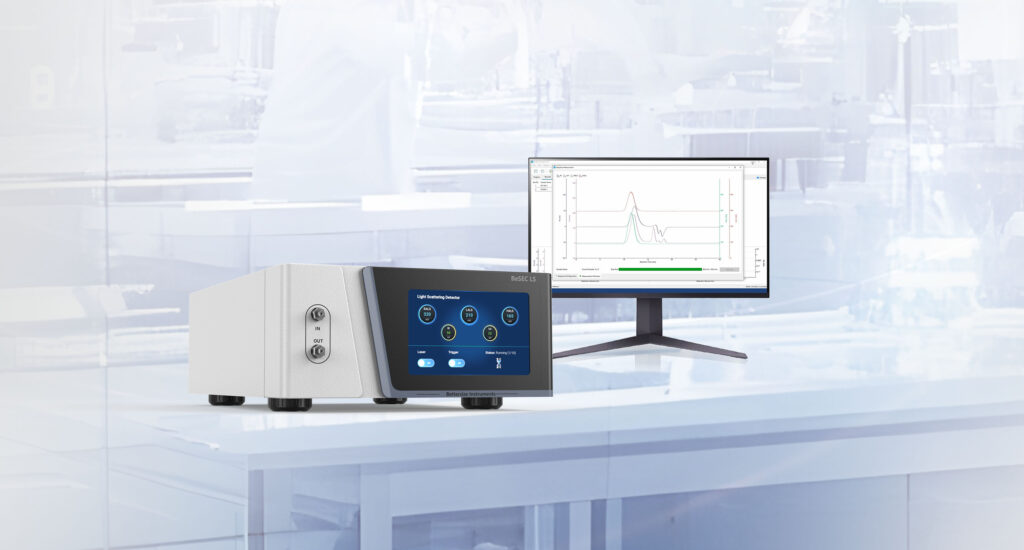
Step into the future of chromatography with the Bettersize BeSEC Series. Designed as a next-generation light scattering detector, the BeSEC transforms conventional SEC/GPC workflows into powerful platforms for absolute molecular weight analysis.
Unlike traditional methods that rely on retention time, the BeSEC delivers first-principles data, ensuring unmatched accuracy for researchers in biopharmaceuticals, advanced polymer science, and food chemistry— accelerating the path from discovery to market.
Features
- Detection angles: 7° and 90°
- Molecular weight range: 1 kDa to 2 GDa
- Supports radius of gyration Rg > 12 nm
- Homopolymer and protein modes
- Acquires RI, UV, and start signals
- Intuitive software with real-time analysis
- 18 μL flow cell reduces band broadening
Benefits
- Proteins: Determine molecular weight, oligomer state, and aggregates
- Ppolymers and polysaccharides: Analyze molecular weight distribution and size
- No column calibration required since Mw is independent of elution volume
- Low-angle detection enables accurate molecular weight
- Compatible with any SEC or GPC system
Why Dual-Angle Detection Matters?
By capturing light scattering data at both 7° (Low-Angle) and 90° (Right-Angle), the system eliminates the inaccuracies of traditional column calibration, and allows for the analysis of absolute molecular weight and molecular size with exceptional sensitivity, even for complex or branched polymers.
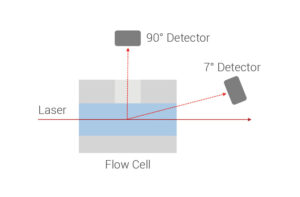
- Direct measurement with low-angle light scattering (LALS) at 7°
- Direct measurement with right-angle light scattering (RALS) at 90°
- LALS delivers high accuracy for larger macromolecules
- RALS provides high sensitivity for smaller macromolecules
Measured Parameters

Number-average molecular weight

Weight-average molecular weight

Z-average molecular weight

Peak molecular weight

Radius of gyration

Polydispersity index

Refractive index increm

Concentration
Model Selection