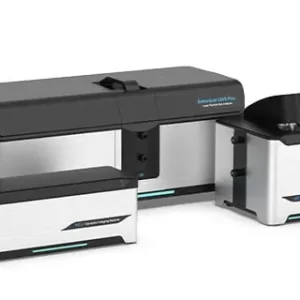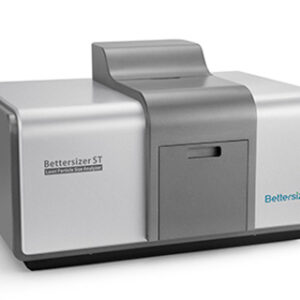
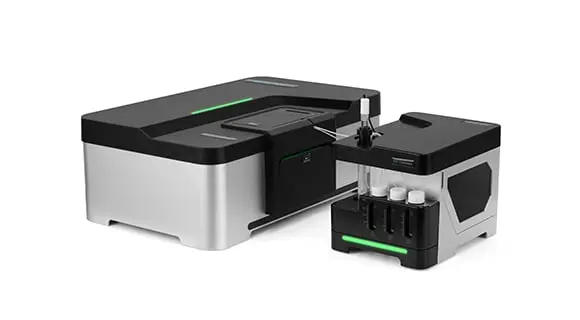


Description
Features and Benefits
- Size range: 0.3nm – 15μm
- Minimum sample volume: 3μL
- APD (Avalanche Photodiode) detector providing exceptional sensitivity
- Automatic adjustment of laser intensity
- Intelligent algorithm of result evaluation
- DLS backscattering (173°) detection technology
- User-adjustable scattering volume for concentrated samples
- PALS (Phase Analysis Light Scattering) technology
- Programmable temperature control system
- Compliance with 21 CFR Part 11, ISO 22412, ISO 13099
Compare BeNano series models
★ Optional
1. Particle Size Measurement — Dynamic Light Scattering (DLS)
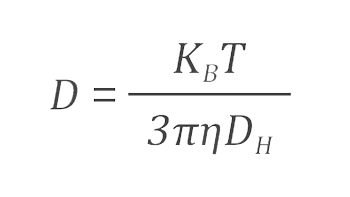
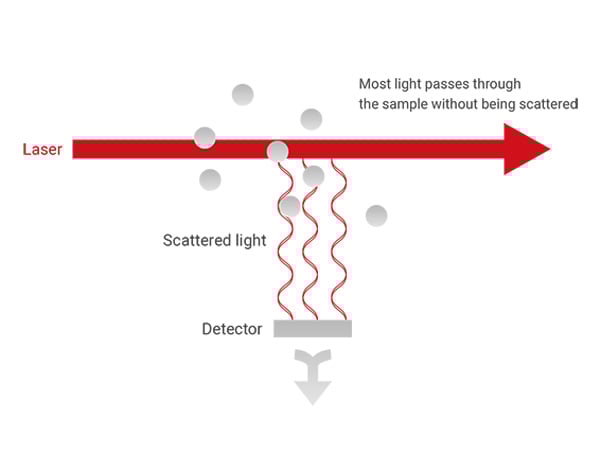
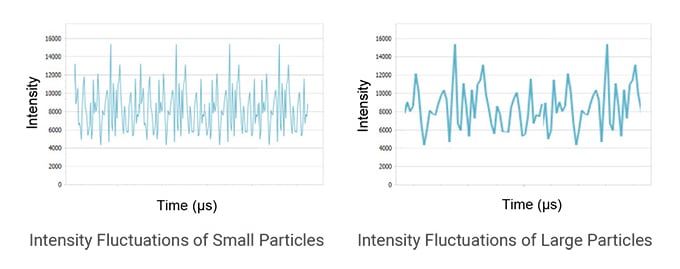
Dynamic Light Scattering (DLS), also known as Photon Correlation Spectroscopy (PCS) or Quasi-Elastic Light Scattering (QELS), is a technique used to determine particle size by analyzing the Brownian motion of particles in a dispersion.DLS is based on the principle of Brownian motion, which relates particle size to velocity—smaller particles diffuse more rapidly, while larger particles move more slowly. The scattering intensities of the particles are detected by an avalanche photodiode (APD) and then converted into a correlation function. From this correlation function, a mathematical algorithm can be applied to obtain the diffusion coefficient (D). The hydrodynamic diameter (DH) and its distribution can be calculated using the Stokes-Einstein equation, which relates the diffusion coefficient to the particle size.
1.1 Backscattering Detection Technology
Using backscattering optics, the analyzer automatically identifies the best detection position by evaluating the sample’s size, concentration, and scattering characteristics. This ensures maximum measurement accuracy while offering the adaptability needed to evaluate a wide range of samples with varying properties.
Features
- Wider Concentration Range: By optimizing the detection position, highly concentrated samples can be detected near the edge of the sample cell, effectively minimizing errors from multiple light scattering.
- Increased Sensitivity: Offers 8-10 times the scattering volume and approximately 10 times greater sensitivity as compared to traditional 90° optics.
- Expanded Size Detection Range: By minimizing multiple light scattering from larger particles, this approach enhances measurement accuracy. Additionally, the significantly larger scattering volume helps reduce the number fluctuations of large particles, leading to more reliable analysis.
- Better Reproducibility: Reduced effects from dust contaminants and unevenly distributed agglomerates, improving reproducibility
2. Zeta Potential Measurement — Electrophoretic Light Scattering (ELS)
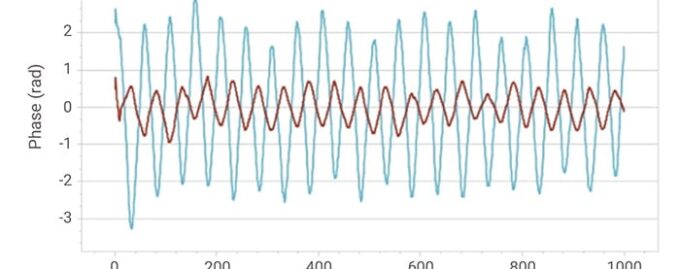
In aqueous systems, charged particles are surrounded by counter-ions that form an inner Stern layer and an outer shear layer. Zeta potential is the electrical potential at the interface of the shear layer. A higher zeta potential indicates greater stability and less aggregation of the suspension system. Electrophoretic light scattering (ELS) measures electrophoretic mobility via Doppler shifts of scattered light, which can be used to determine the zeta potential of a sample by Henry’s equation.
Colloidal Stability

- High repulsion force of particles
- High zeta potential

- Flocculation, aggregation, sedimentation
- Low or zero zeta potential
2.1 Phase Analysis Light Scattering (PALS)
PALS is a more advanced technique than traditional ELS, which has been further developed by Bettersize to measure the zeta potential.
Features and Benefits
- Accurate measurement of samples with low electrophoretic mobility
- Effective for samples in organic solvents with low dielectric constant
- More accurate results for samples with high conductivity
- Effectively measures the zeta potential of particles whose charge approaches the isoelectric point
3. Molecular Weight Measurement — Static light scattering (SLS)
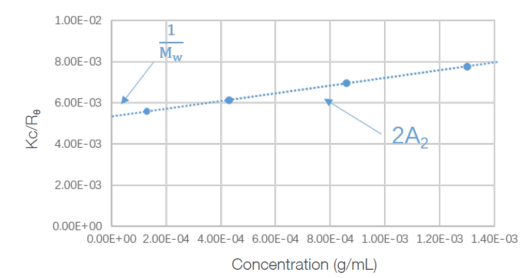
Static light scattering (SLS) is a technique that measures scattering intensities to calculate the weight-average molecular weight (Mw) and the second virial coefficient (A2) of a sample using the Rayleigh equation.
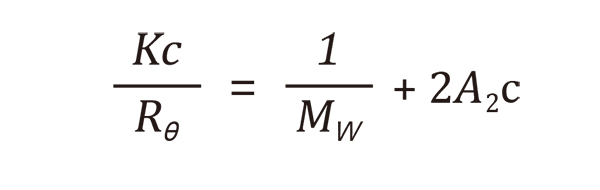
where c is the sample concentration, θ is the detection angle, Rθ is the Rayleigh ratio used to characterize the intensity ratio between the scattered light and the incident light at the angle of θ, Mw is the sample’s weight-average molecular weight, A2 is the second virial coefficient, and K is a constant related to (dn/dc)2.
Features & Benefits
- Non-invasive technique
- Suitable for particles dissolved in liquid
- Measures molecular weight of samples smaller than 30 nm
- Provides second virial coefficient A2, indicating the intermolecular interactions
4. DLS Microrheology Measurement
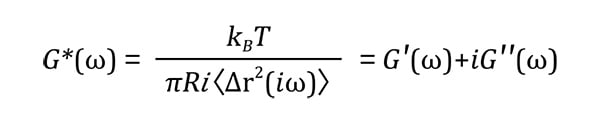
Dynamic Light Scattering Microrheology (DLS Microrheology) is an economical and efficient technique that utilizes dynamic light scattering to determine rheological properties. By analyzing the Brownian motion of colloidal tracer particles, information about the viscoelastic properties of the system, such as viscoelastic modulus, complex viscosity and creep compliance, can be obtained with the generalized Stokes-Einstein equation.
Features & Benefits
- Investigates rheological behaviors by measuring the thermally-driven motion of tracer particles within a material being studied
- Facilitates the measurement of a broad frequency range in a single measurement
- Suitable for dilute, weakly structured solutions
- Delivers fast results in 1–2 minutes with easy operation
- Offers rheological insights across a wide temperature range from -15°C to 120°C
- Complements conventional mechanical rheology
5. DLS Flow Mode Measurement
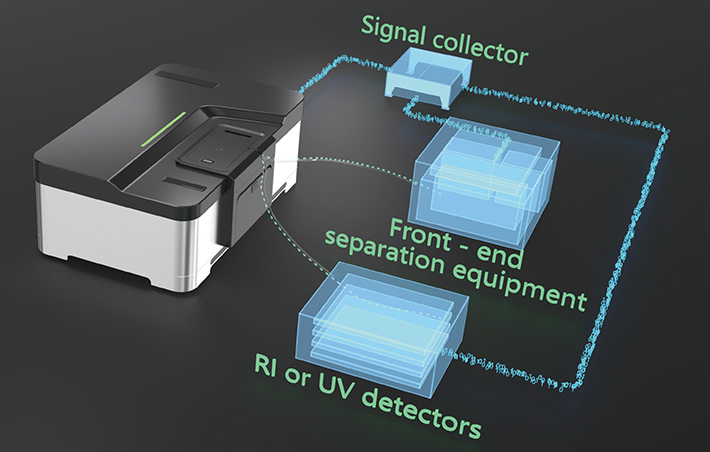
DLS flow mode provides a high-resolution size result of a complex, polydisperse system. When combined with front-end separation equipment such as GPC/SEC or FFF, particles are separated into monodisperse fractions and flow through the BeNano in sequence by size. The size of each fraction is continuously measured and summed into a high-resolution size distribution.
BeNano can acquire RI or UV signals, offering a more accurate volume and number distributions independent of the algorithm compared to a batch-mode measurement.
Features & Benefits
- DLS analyzer connecting with GPC/SEC, FFF, etc.
- Receiving up to 3 signals from RI, UV, or other detectors
- 27 μL low-volume flow cell to avoid band broadening
- Size resolution as high as 1.3:1
- Size distributions weighted by number and volume, in addition to intensity
- Suitable for complex, polydisperse systems such as proteins, polymers, etc.
6. Temperature Trend Measurement
Features & Benefits
- Programmed temperature trend measurement from -15°C to 120°C
- Important for analyzing particle size and zeta potential across varying temperatures
- Easy examination of protein formulation stability
- Accelerates real-time aging through elevated temperature simulation
7. Transmittance Measurement
Features & Benefits
- Measures transmittance rapidly by detecting the light intensity transmitted through the sample
- Requires a minimum sample volume of 3 μL
- Sensitive indicator for evaluating batch consistency in industrial products
- Quantitative tool for identifying sample instability
8. Refractive Index Measurement
The BeNano Series can determine the refractive index (RI) measurement of liquids with outstanding precision. A patented wedge-shaped cuvette holds the liquid sample while the CMOS detector measures the deflection of the light path after it traverses the liquid to calculate the RI.
Features & Benefits
- Patented technique supports a broad refractive index range from 1.2 to 1.6
- Requires only two calibration references and utilizes linear calibration suitable for extrapolation
- No tracer particles or prior knowledge of viscosity are required
- Enables DLS and ELS measurement for dispersants with unknown refractive indices
- Suitable for both organic and aqueous solvents
9. Concentration Measurement
The BeNano measures particle volume fraction and number concentrations in particles per milliliter (particles/mL) for each population through the patented LEDLS technique. The incident light passes through the sample and reaches a photodiode detector, which records the transmitted intensity. By comparing it with that of a blank solution and combining the data with the particle size distribution from dynamic light scattering, the particle concentration is determined.
Features & Benefits
- Enables fast measurement with single-angle Detection
- Simplifies sample preparation with no need for calibration
- Ideal for screening-type measurements
- Suitable for both aqueous and organic samples
10. Sedimentation Size Measurement
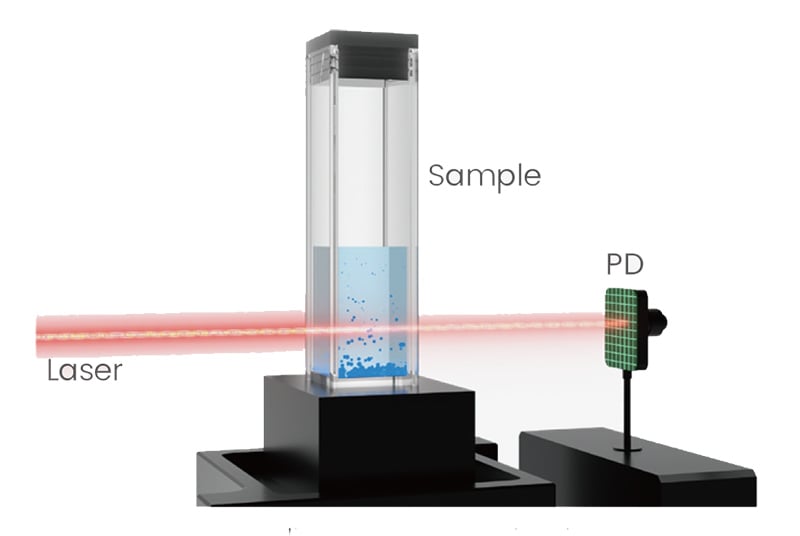
The BeNano Series provides particle size results based on the sedimentation method. The sedimentation rate of particles is directly related to their size, with larger particles settling faster. The PD detector monitors the changes in transmitted intensity over time, enabling the determination of particle size and distribution for particles up to 50 microns.
Features & Benefits
- Expands size measurement range up to 50 μm
- Suitable for samples containing both nanoparticles and microparticles, meeting the needs of broad distribution samples
- Provides volume-based size distributions for micron-sized particles, consistent with laser diffraction results
- Achieves up to 1.5x size resolution for multiple peaks
11. pH Autotitration Measurement
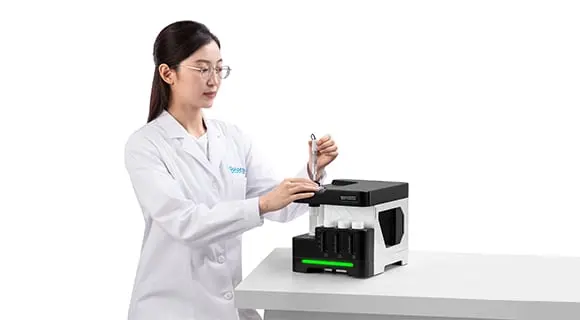
The BAT-1 + Degasser units integrate seamlessly with the BeNano Series for automatic acid-base titration and isoelectric point (IEP) determination. The system automatically enables sample flow during measurement, ensuring high efficiency and consistent, operator-independent results, as well as precise titration.
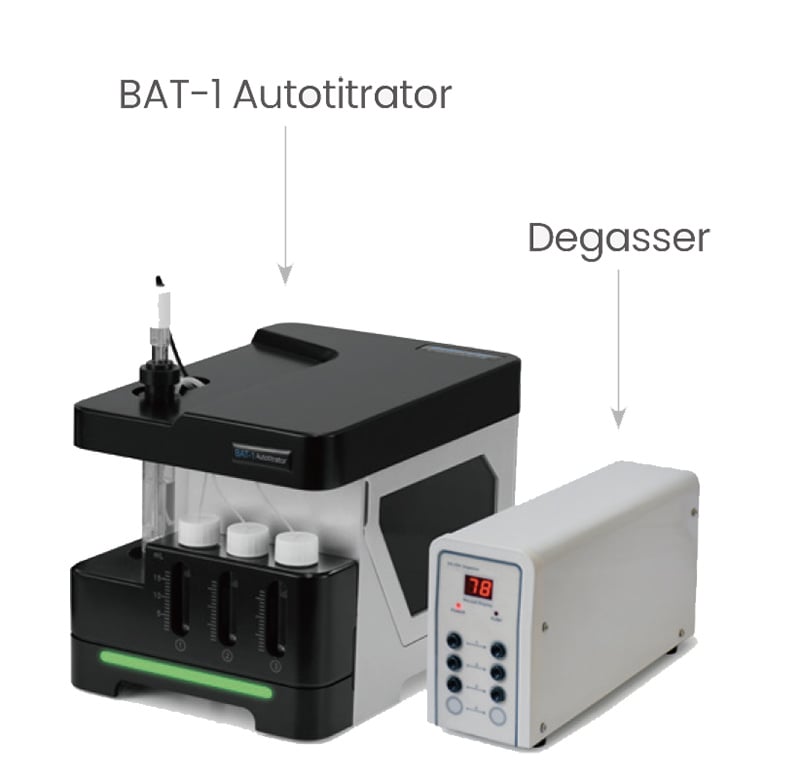
An optional degasser is available to remove dissolved gases from titrants. Preventing bubbles improves the accuracy of zeta potential measurements.
Features & Benefits
- Accurate size and zeta potential analysis from pH 1 to 13
- Enhanced safety with minimal exposure to corrosive liquids
- Automated workflow reduces training needs and researcher workload
- Fewer manual steps minimize human error
- Completes each measurement cycle in as little as 30 minutes
- Smart Titration: Based on the initial pH and the target pH, the required titrants can be chosen automatically via the software