
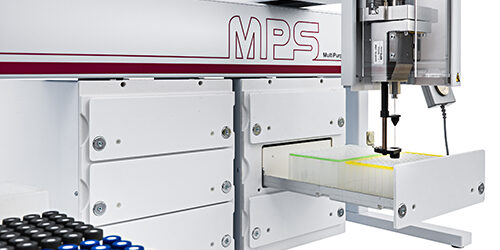
Automated Sample Preparation for GC-MS and LC-MS: Improving Laboratory Efficiency
In modern analytical laboratories, GC-MS and LC-MS systems provide highly sensitive and accurate results for a wide range of applications. However, the overall quality and reliability of these results depend heavily on one critical step — sample preparation.
Manual sample preparation is often time-consuming, labor-intensive, and prone to variability, especially when dealing with complex workflows such as extraction, cleanup, derivatization, and dilution. As sample throughput increases, these challenges become even more significant.
Automated sample preparation offers a practical solution by improving efficiency, reproducibility, and workflow consistency, allowing laboratories to maximize the performance of their analytical systems.

Challenges in Manual Sample Preparation
Despite advances in analytical instrumentation, many laboratories still rely on manual processes for sample preparation. This can introduce several limitations:
- High variability due to operator-dependent techniques
- Time-consuming workflows involving multiple preparation steps
- Limited throughput for large sample batches
- Increased risk of contamination and human error
- Inefficient use of skilled personnel
These challenges can impact both data quality and laboratory productivity, particularly in high-demand environments.
What is Automated Sample Preparation?
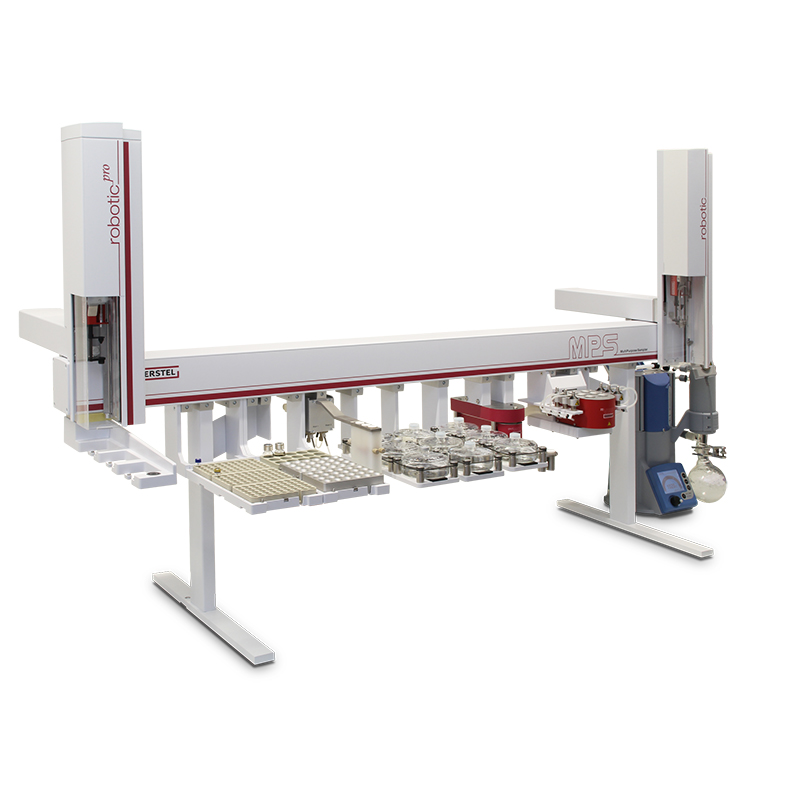
Automated sample preparation involves the use of robotic systems and intelligent workflows to perform routine laboratory tasks such as:
- Liquid handling and dilution
- Extraction and cleanup (SPE, SPME)
- Derivatization
- Sample transfer and injection
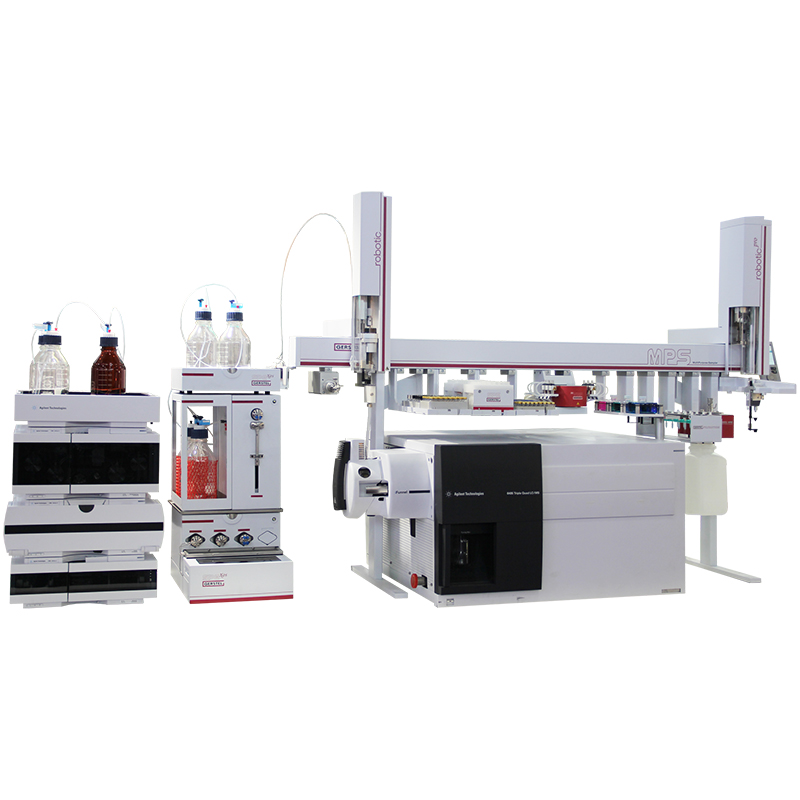
These systems can be fully integrated with GC-MS and LC-MS instruments or operated as standalone workstations, depending on laboratory requirements.
By automating repetitive and critical steps, laboratories can achieve greater consistency and efficiency while reducing manual intervention.
Automated Workflow for GC-MS and LC-MS
Automated systems streamline multi-step sample preparation into a continuous and controlled workflow, reducing variability between samples.
Typical Workflow
Each step is executed with high precision and repeatability, ensuring consistent sample handling across batches.
Key Benefits of Automation
1. Improved Reproducibility
Automation minimizes operator variability, resulting in consistent and reliable analytical results.
2. Increased Throughput
Automated systems can process large sample batches efficiently, supporting high-demand laboratories.
3. Reduced Human Error
By limiting manual handling, automation reduces the risk of pipetting errors, contamination, and inconsistencies.
4. Time and Resource Efficiency
Laboratory personnel can focus on data analysis and method development, rather than repetitive tasks.
5. Enhanced Data Quality
Consistent sample preparation leads to more reliable and defensible results, particularly in regulated environments.
Applications of Automated Sample Preparation
Automated sample preparation is widely used across industries where GC-MS and LC-MS analysis are essential:
Environmental Analysis
- Pesticides in water and soil
- Volatile organic compounds (VOCs)
- Emerging contaminants
Food & Beverage
- Pesticide residues
- MOSH/MOAH analysis
- 3-MCPD and food contaminants
Pharmaceutical & Life Sciences
- Drug compounds and impurities
- Biological sample preparation
- Metabolomics workflows
Forensics & Toxicology
- Drugs of abuse
- Toxicological screening
- Trace-level detection
Manual vs Automated Sample Preparation
Automation allows laboratories to standardize workflows, improving both efficiency and analytical confidence.

Supporting Modern Analytical Laboratories
As laboratories continue to handle larger sample volumes and more complex analyses, automation becomes an essential tool for maintaining:
- Consistent data quality
- Efficient operations
- Scalable workflows
Automated sample preparation ensures that GC-MS and LC-MS systems operate at their full potential, supported by reliable and reproducible sample handling.
Conclusion
Sample preparation is a critical step that directly influences analytical results.
By adopting automated sample preparation for GC-MS and LC-MS, laboratories can improve efficiency, reproducibility, and overall workflow performance.
Automation not only enhances productivity but also supports high-quality, reliable data, making it an increasingly important component of modern analytical laboratories.


