Microplastics Analysis in Water: Techniques and Challenges — A Focus on TED-GC/MS

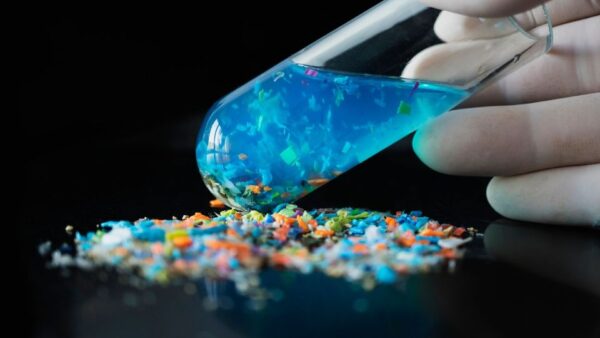
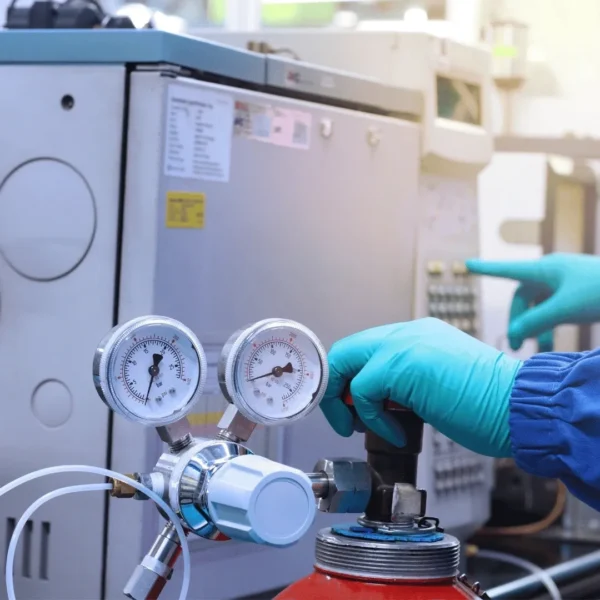
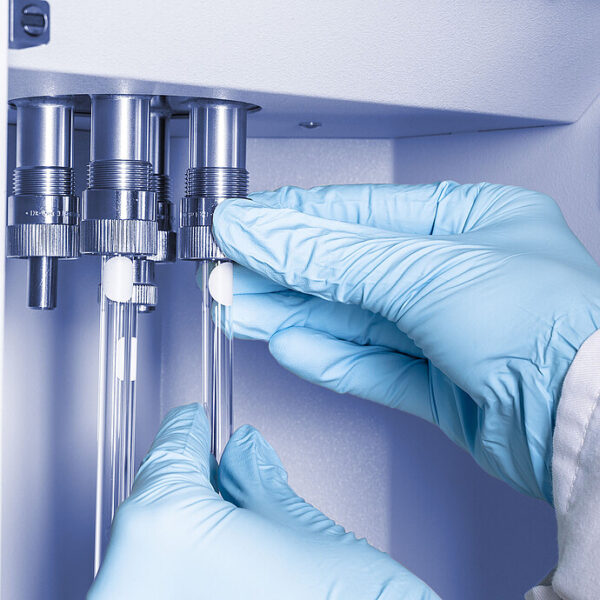
Microplastics Analysis in Water: Techniques and Challenges — A Focus on TED-GC/MS Microplastics have become a major concern in environmental monitoring due to their widespread presence in water systems and potential impact on ecosystems and human health. Detecting and characterizing these particles requires reliable, sensitive, and reproducible analytical approaches rooted in analytical chemistry, which encompasses…

Wet vs Dry Particle Size Analysis: Which Method Should You Use?

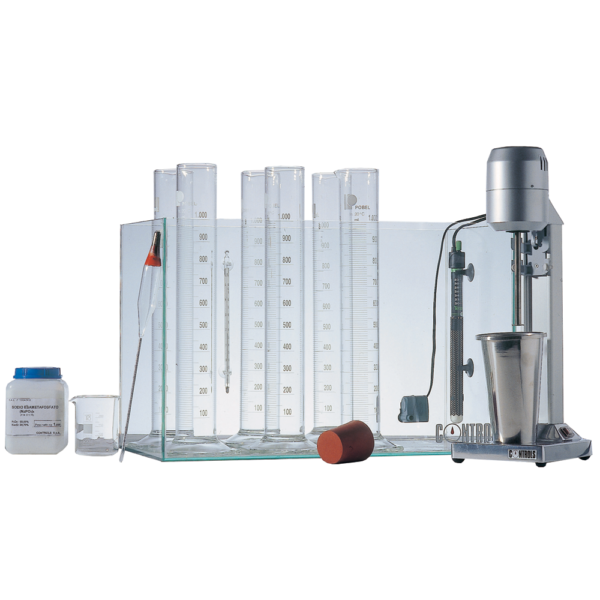
Wet vs Dry Particle Size Analysis: Which Method Should You Use? Particle size analysis is essential across materials science, pharmaceuticals, food technology, mining, environmental testing, and countless other fields. Particle size refers to the measurement of the dimensions of individual solid particles, liquid droplets, or gaseous bubbles, generally expressed as a one-dimensional scalar value such…

Precision at the Heart of SAF (Sustainable Aviation Fuel): Why Chemisorption is the Secret to Sustainable Skies

Precision at the Heart of SAF (Sustainable Aviation Fuel): Why Chemisorption is the Secret to Sustainable Skies The High Stakes of SAF Production The aviation industry is on a countdown to Net Zero, and Malaysia is positioning itself as a regional hub for Sustainable Aviation Fuel (SAF). However, moving from traditional crude oil to “waste-to-fuel”…

Sustainability in the Lab: Replacing Wet Chemistry with Light

Sustainability in the Lab: Replacing Wet Chemistry with Light The Modern Lab’s Dilemma: The Cost of the “Old Way” For decades, the gold standard for analyzing palm oil parameters—like Iodine Value (IV), Free Fatty Acids (FFA), and Peroxide Value (PV)—has been wet chemistry titration. Wet chemistry is a form of analytical chemistry that uses classical,…

Precision in Every Bite: Why Dynamic Crystallization is the Secret to Premium Chocolate

Precision in Every Bite: Why Dynamic Crystallization is the Secret to Premium Chocolate In the world of confectionery, the crystallization of cocoa butter is the fine line between a premium product and a total loss. This invisible process dictates everything from the glossy shine of a praline to that satisfying “snap” when you break a…

Beyond the Burette: Revolutionizing Quality Control with Analytical Chemistry – From Hours to Seconds with Bruker FT-NIR

Beyond the Burette: Revolutionizing Quality Control with Analytical Chemistry – From Hours to Seconds with Bruker FT-NIR How modern laboratories are ditching wet chemistry for rapid, reagent-free multi-component analysis. In the world of analytical chemistry—particularly within the palm oil industry—the burette has long been a symbol of precision. For decades, traditional wet chemistry has served…

BET Surface Area: Gas Adsorption Analysis and Understanding BET Theory

BET Surface Area: Gas Adsorption Analysis and Understanding BET Theory You’ll quickly see why gas adsorption matters when you need to quantify a material’s real surface area instead of just its geometric size. BET theory, developed as a technique by Stephen Brunauer, Paul Emmett, and Edward Teller in 1938, aims to explain the physical adsorption…

bet surface area testing

What Is BET Surface Area? A Practical Guide for Material Characterization

What Is BET Surface Area? A Practical Guide for Material Characterization You want a clear, practical explanation of BET surface area and why it matters for material characterization. BET surface area measures the accessible microscopic surface area of a solid by quantifying how much gas physically adsorbs onto it, giving a standardized metric (m²/g) that…

bet surface area

BET Surface Area Analysis Explained: Principles, Method, and Applications

BET Surface Area Analysis Explained: Principles, Method, and Applications You’ll get a clear, practical explanation of what BET surface area analysis measures and why it matters for materials like catalysts, adsorbents, and nanomaterials. BET quantifies the accessible surface area by modeling multilayer gas adsorption on a solid, giving a reproducible metric that predicts how a…

Automated Sample Preparation for GC-MS and LC-MS: Improving Laboratory Efficiency

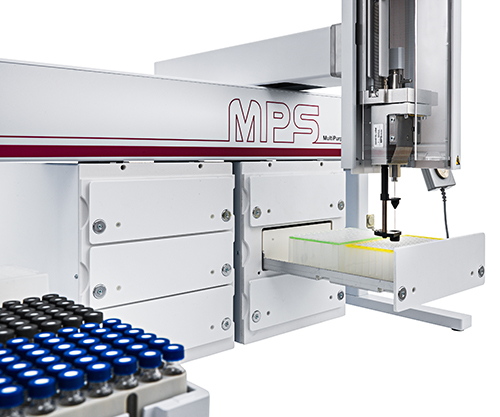
Automated Sample Preparation for GC-MS and LC-MS: Improving Laboratory Efficiency In modern analytical laboratories, GC-MS and LC-MS systems provide highly sensitive and accurate results for a wide range of applications. However, the overall quality and reliability of these results depend heavily on one critical step — sample preparation. Manual sample preparation is often time-consuming, labor-intensive,…

Particle Size Analysis Explained: When to Use Laser Diffraction vs Dynamic Light Scattering

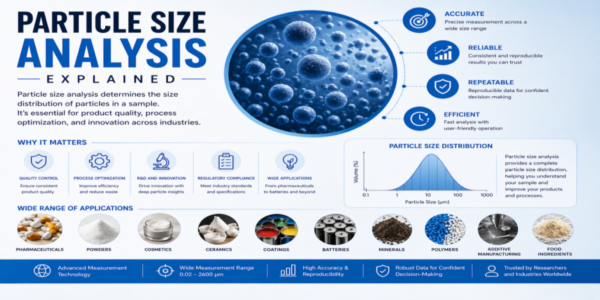
Particle Size Analysis Explained: When to Use Laser Diffraction vs Dynamic Light Scattering Particle size plays a critical role in determining the performance, stability, and functionality of many materials. From pharmaceuticals and catalysts to food powders and advanced nanomaterials, particle size directly influences properties such as reactivity, dissolution rate, suspension stability, and product quality. Because…