
An Introduction to Mass Spectrometry
Precision, Purity, and Performance: The Multi-Application Guide to Sciway Nitrogen Generators
In the modern laboratory, nitrogen gas is more than just a consumable—it is a critical utility. Whether it’s providing the curtain gas for a mass spectrometer or creating an inert environment for delicate chemical synthesis, the quality of your nitrogen directly impacts the integrity of your results.
For years, laboratories across Malaysia have relied on high-pressure gas cylinders. However, the hidden costs of logistics, safety risks, and purity fluctuations are driving a shift toward on-site generation.
As the authorized distributor of Sciway, LabAlliance Sdn Bhd is proud to introduce a new standard of gas generation that delivers on three core pillars: Precision, Purity, and Performance.
- Precision: Tailored for High-Sensitivity Analysis
The primary application for high-purity nitrogen is supporting sophisticated analytical instruments like LC-MS/MS and GC-MS/MS.
- Mass Spectrometry: For LC-MS/MS, nitrogen is used as a nebulizing and drying gas. Any pulse or fluctuation in pressure can lead to baseline noise and “ghost peaks.” Sciway generators are engineered with advanced flow-control technology to provide a rock-steady supply that ensures your ion source remains stable. Proper sample preparation is crucial in mass spectrometry workflows, as it helps ensure accurate and interference-free results by minimizing contaminants and optimizing analyte detection.
- Carrier Gas in GC: In Gas Chromatography, nitrogen serves as an excellent carrier or make-up gas. Sciway’s X-Series and BIO-Series ensure that the gas is free of hydrocarbons and moisture, protecting your expensive columns from degradation. In GC-MS, high temperatures—typically around 300°C in the injection port and oven—are used to volatilize samples. However, these high temperatures can cause thermal degradation of samples if not properly managed, potentially generating artifacts or degradation products that compromise analytical accuracy.
- LC-MS/MS: Liquid chromatography-mass spectrometry (LC-MS) is commonly used in pharmaceutical analysis to separate compounds chromatographically before they are introduced to the mass spectrometer, ensuring precise identification and quantification of analytes.
- Purity: The “Quiet” Defender of Your Lab
Purity isn’t just about the percentage of nitrogen (N2) it’s about what isn’t there. Moisture, oxygen, and oil carryovers are the enemies of precision.
- PSA Technology: Sciway uses Pressure Swing Adsorption (PSA) technology. Unlike basic membrane filters, PSA uses Carbon Molecular Sieves (CMS) to adsorb oxygen and other impurities at high pressure, releasing ultra-pure nitrogen (99.999%) upon decompression.
- Oil-Free Commitment: Sciway generators utilize integrated oil-free vortex compressors. This eliminates the risk of oil aerosols entering your gas stream—a common problem with low-end generators that can “poison” an MS source and lead to thousands of dollars in repair costs.
- Performance: A Multi-Application Powerhouse
While many associate nitrogen generators exclusively with chromatography, the Sciwayrange is a versatile asset for the entire facility:
- Sample Evaporation & Blowdown: High-volume nitrogen is essential for concentrating samples. Using a generator eliminates the “cylinder anxiety” of running out of gas during a critical concentration step.
- Inerting & Blanketing: For R&D labs handling air-sensitive reagents, Sciway provides a constant “blanket” of nitrogen to prevent oxidation, extending the shelf-life of expensive chemical stocks.
- ELSD & CAD Detectors: These detectors are “gas-hungry.” A dedicated Sciway unit provides the high-flow, low-noise environment required for these specialized HPLC applications.
- Glove Box Integration: Maintaining a moisture-free atmosphere in glove boxes for material science or battery research is effortless with an automated on-site supply.
Why Lab Managers are Choosing Sciway
Operating a lab in Malaysia comes with unique challenges, from tropical humidity to supply chain logistics. As a distributor, we provide a localized solution that addresses these pain points:
| Feature | The Sciway Advantage |
| Quiet Operation | Ultra-quiet vortex technology (sub-50dB), perfect for under-bench placement. |
| Footprint | Compact, space-saving designs that fit into modern, crowded labs. |
| Reliability | Smart monitoring with touch-screen interfaces for real-time pressure and flow data. |
| Support | Local technical service and maintenance distributor’s trained engineers. |
The ROI: From Expense to Asset
A nitrogen generator is one of the few pieces of lab equipment that truly pays for itself. By eliminating cylinder rental, delivery surcharges, and the labor costs associated with tank swaps, most facilities see a full Return on Investment (ROI) within 18 to 24 months.
Precision in the lab starts with the purity of your gas. Don’t let your research be limited by the logistics of bottled gas.
At LabAlliance we ready to help you audit your nitrogen needs and select the perfect Sciwaymodel to future-proof your laboratory.
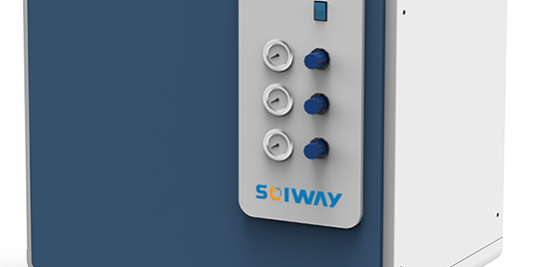
| The Sciway X series is specially developed for LCMS/MS to meet the gas demand of different models of mass spectrometers from SCIEX, Waters, Agilent, Thermo Fisher, Shimadzu, Bruker, Perkin Elmer, etc. |
What is Mass Spectrometry
Think of mass spectrometry as a sophisticated way to figure out exactly what’s in any sample you’re working with. It works by first turning molecules into charged particles called ions, then measuring something called their mass-to-charge ratio. The whole process gives you a detailed fingerprint of what’s actually there. You end up with what scientists call a mass spectrum – basically a chart that shows you how much of each component exists in your sample.
This technique has become incredibly valuable across analytical chemistry, biology, and medicine because it can handle really complex mixtures and help identify unknown compounds. Take liquid chromatography mass spectrometry, or LC-MS, for example. Here’s how it works: your sample gets separated first using liquid chromatography, which breaks everything down into individual components. Then those separated pieces go into the mass spectrometer where their mass-to-charge ratios get measured. This gives you precise identification and quantification of each part. The combination makes LC-MS particularly powerful for protein analysis, drug discovery, and clinical work where accuracy really matters.
What makes mass spectrometry so useful is its flexibility. You can analyze small molecules, proteins, or even large biomolecules with the same basic approach. This versatility has made it essential in labs everywhere. Whether you’re doing quality control, researching diseases, or characterizing materials, mass spectrometry gives you the detailed insights you need about what’s actually in your samples and how they behave.
History and Development
Mass spectrometry has quite a story. It all started in the early 1900s when brilliant minds like J.J. Thomson figured out how to separate ions based on their mass-to-charge ratio—pretty groundbreaking stuff for the time. Then F.W. Aston came along and took things further with his mass spectrograph, which finally gave scientists a way to measure isotopes and molecular weights with real precision. What’s fascinating is how the field kept evolving over the years. Take electrospray ionization (ESI), for example—this technique revolutionized everything because it could gently ionize those massive biomolecules without destroying them. And then you have sophisticated systems like the quadrupole time-of-flight (Q-TOF) that brought even more analytical power to the table.
Today’s world relies heavily on mass spectrometry, and honestly, it’s hard to imagine modern science without it. You’ll find it working behind the scenes in pharmaceuticals, biotechnology, environmental monitoring, and clinical diagnostics—pretty much anywhere precise analysis matters. Companies like LabAlliance Sdn Bhd in Shah Alam, Malaysia understand this reality well. They’re out there providing cutting-edge technologies and real solutions that help laboratories make the most of what modern mass spectrometry can do. When you have the right instrumentation and expert support backing you up, it opens doors to analytical applications that seemed impossible just decades ago.
Ionization Techniques
Think of ionization as the gateway to mass spectrometry. You can’t analyze what you can’t measure, and neutral molecules simply won’t play ball with a mass spectrometer. That’s where ionization steps in, transforming those neutral molecules into charged ions that the instrument can actually work with. The technique you choose makes all the difference, depending on what you’re trying to analyze and what answers you’re looking for.
Electron ionization, or EI, is probably the most straightforward approach you’ll encounter. Picture high-energy electrons smashing into your molecules like molecular bumper cars. The result? Positive ions and plenty of fragments flying around. This might sound destructive, but it’s actually incredibly useful. Small molecules handle this treatment well, and those fragmentation patterns tell a detailed story about what you’re looking at. It’s like having a molecular fingerprint that reveals the structure piece by piece.
Now, if you’re dealing with larger, more delicate molecules like proteins or peptides, you’ll want something gentler. That’s where electrospray ionization comes to the rescue. ESI works more like a fine mist than a demolition derby. You apply a high voltage to your liquid sample, creating tiny charged droplets that gently release ions as the solvent evaporates. Your big biomolecules stay largely intact, which is exactly what you want when you’re trying to study proteins without breaking them apart.
There are other players in this game too. Chemical ionization takes a different approach altogether, using reagent gases to hand off charges to your analyte molecules. You get cleaner molecular ions with less of that fragmentation you see in EI. The key is matching your ionization method to your specific needs. What kind of sample are you working with? How much fragmentation can you tolerate? What information are you really after?
The bottom line is simple: pick the right ionization technique, and you’re setting yourself up for success. Your mass spectrometry data will be cleaner, more accurate, and actually useful for identifying and measuring whatever compounds you’re studying. It’s one of those foundational choices that can make or break your entire analysis.
Mass Spectrometry Configurations
When you’re setting up mass spectrometry for your lab, you’ll find there are several ways to configure your instrument. Each setup brings its own strengths to the table, so the choice really depends on what you need to accomplish and how complex your samples are.
The single quadrupole setup is where most people start, and for good reason. It uses just one quadrupole mass analyzer to sort ions by their mass-to-charge ratio. You’ll see this configuration in labs doing routine small molecule analysis because it delivers reliable mass spectrum data without unnecessary complexity. It gets the job done effectively when you need straightforward results.
Now, if you’re dealing with trickier samples or need to detect really low concentrations, the triple quadrupole configuration might be exactly what you need. This setup chains three quadrupole analyzers together, which gives you much better sensitivity and selectivity. It’s particularly helpful when you’re trying to quantify specific compounds in complex mixtures or hunting for trace amounts of something important.
For those times when you need both high resolution and precise mass measurements, the quadrupole time-of-flight (Q-TOF) configuration really shines. It pairs a quadrupole analyzer with a time-of-flight analyzer, giving you the accuracy needed for protein identification and biomarker discovery. If you’re working with unknown compounds or need to dig deep into complex biological samples, this setup can provide the detailed information you’re after.
The key is matching your instrument configuration to your actual analytical needs. Whether you’re running routine quality control checks or diving into cutting-edge research, choosing the right setup helps ensure you get reliable data that actually answers your questions.
Separation Techniques
When you’re dealing with complex mixtures in the lab, separation techniques paired with mass spectrometry become your best friends. They help you get clear, specific results that you can actually trust. Gas chromatography (GC) and liquid chromatography (LC) are the go-to methods that work beautifully alongside mass spectrometry.
Gas chromatography mass spectrometry, or GC-MS as most people call it, handles volatile compounds really well. Think of it this way: compounds get separated based on their boiling points and how they interact with the material inside the GC column. Once they’re nicely separated, they move into the mass spectrometer where ionization happens and you can analyze those resulting ions.
Now, if you’re working with compounds that don’t like heat or won’t vaporize easily, liquid chromatography mass spectrometry (LC-MS) is your solution. Here’s how it works: your sample gets separated while it’s still in liquid form, with the mobile phase carrying everything through the column. After separation, techniques like electrospray ionization help transfer your analytes into the gas phase so the mass spectrometer can do its job.
There’s something pretty neat called ambient ionization techniques, like desorption electrospray ionization (DESI), that let you analyze samples directly under normal atmospheric pressure. You don’t even need to separate things first. This approach works particularly well when you need quick screening or analysis for clinical and forensic work.
When you combine these separation techniques with mass spectrometry, you’re setting yourself up for success. You’ll get the high sensitivity, selectivity, and throughput you need to handle complex samples effectively. This combination supports a huge range of scientific and industrial work, making it an incredibly valuable approach for most laboratories.