Particle Size Analysis Explained: When to Use Laser Diffraction vs Dynamic Light Scattering
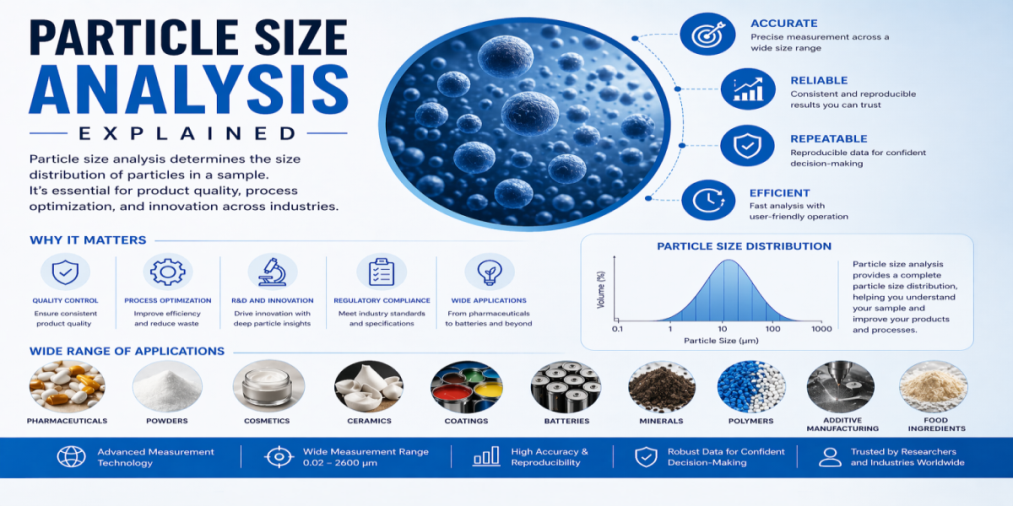
Particle size plays a critical role in determining the performance, stability, and functionality of many materials. From pharmaceuticals and catalysts to food powders and advanced nanomaterials, particle size directly influences properties such as reactivity, dissolution rate, suspension stability, and product quality.
Because of its importance, particle size analysis is a fundamental measurement performed in laboratories across industries. Among the many analytical techniques available, Laser Diffraction (LD) and Dynamic Light Scattering (DLS) are two of the most widely used methods. Each technique serves a different measurement range and application need.
Understanding when to use Laser Diffraction or Dynamic Light Scattering helps ensure accurate and meaningful particle size characterization.
Why Particle Size Matters
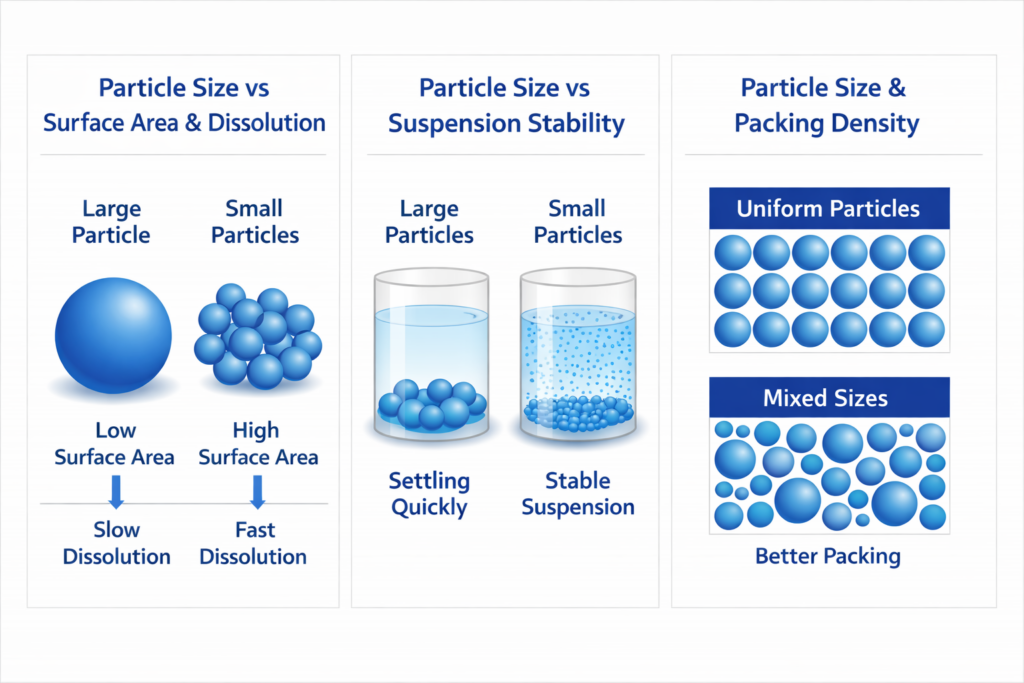
Particle size affects numerous physical and chemical properties of materials, including:
-
Dissolution rate in pharmaceuticals
-
Flowability and packing behavior in powders
-
Surface area and reactivity in catalysts
-
Suspension stability in dispersions and emulsions
-
Optical and mechanical properties in advanced materials
Reliable particle size data allows laboratories to maintain consistent product performance and process control.
Laser Diffraction (LD)
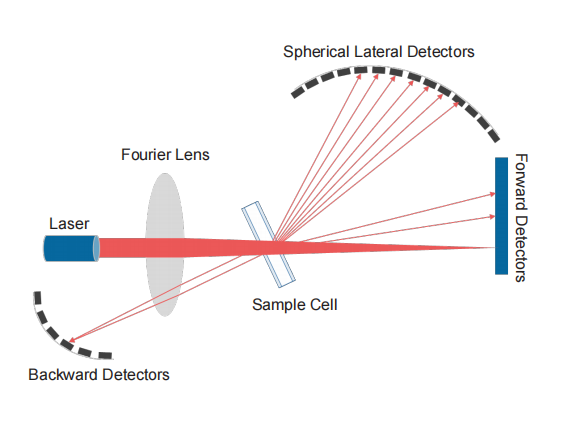
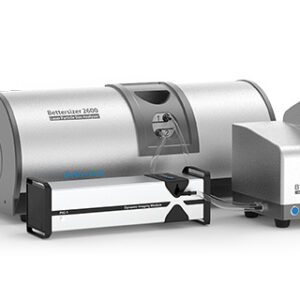
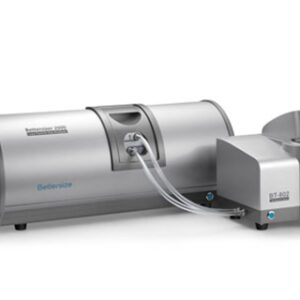
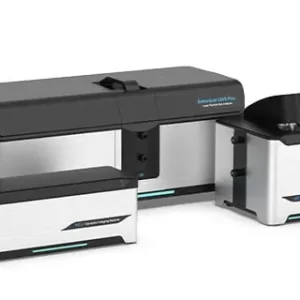
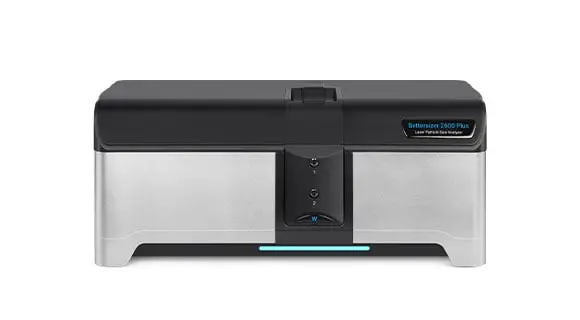
Laser diffraction is one of the most widely adopted particle sizing techniques for powders, suspensions, and emulsions. It determines particle size by measuring how particles scatter light at different angles when illuminated by a laser.
Large particles scatter light at small angles, while smaller particles scatter light at larger angles. By analyzing the scattering pattern, the instrument calculates the particle size distribution.
Key Characteristics of Laser Diffraction
-
Wide measurement range (typically ~0.1 µm to several millimeters)
-
Suitable for both wet and dry samples
-
Fast measurement times
-
Excellent for broad particle size distributions
-
High repeatability for routine quality control
Typical Applications
Laser diffraction is commonly used in:
Pharmaceuticals
-
API particle size control
-
Tablet formulation studies
Powders and Bulk Materials
-
Cement and construction materials
-
Metal powders and additive manufacturing materials
Food & Agriculture
-
Flour and starch particle size
-
Beverage and dairy emulsions
Chemicals and Catalysts
-
Pigments and fillers
-
Catalyst supports and powders
Dynamic Light Scattering (DLS)
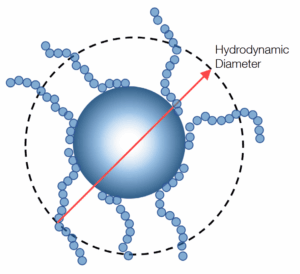
Dynamic light scattering is designed for submicron and nanoscale particles, particularly in dilute liquid dispersions. Instead of measuring scattering angle patterns, DLS analyzes fluctuations in scattered light intensity caused by Brownian motion of particles.
Smaller particles move faster in solution, producing different fluctuation patterns compared to larger particles. These fluctuations are used to calculate the hydrodynamic particle size.
Key Characteristics of Dynamic Light Scattering
-
Ideal for nanoparticles and colloids
-
Measurement range typically 1 nm – 1 µm
-
Highly sensitive for small particle systems
-
Requires stable liquid dispersions
-
Widely used in nanomaterial and life science research
Typical Applications
Dynamic light scattering is commonly used in:
Nanomaterials
-
Nanoparticle synthesis and characterization
-
Quantum dots and nanocomposites
Pharmaceutical & Biotechnology
-
Liposomes and drug delivery systems
-
Protein aggregation studies
Colloids and Dispersions
-
Latex particles
-
Polymer nanoparticles
Advanced Materials
-
Nanocatalysts
-
Functional nanomaterials

Laser Diffraction vs Dynamic Light Scattering
Although both techniques measure particle size, they serve different particle size ranges and sample types.
Choosing the Right Technique
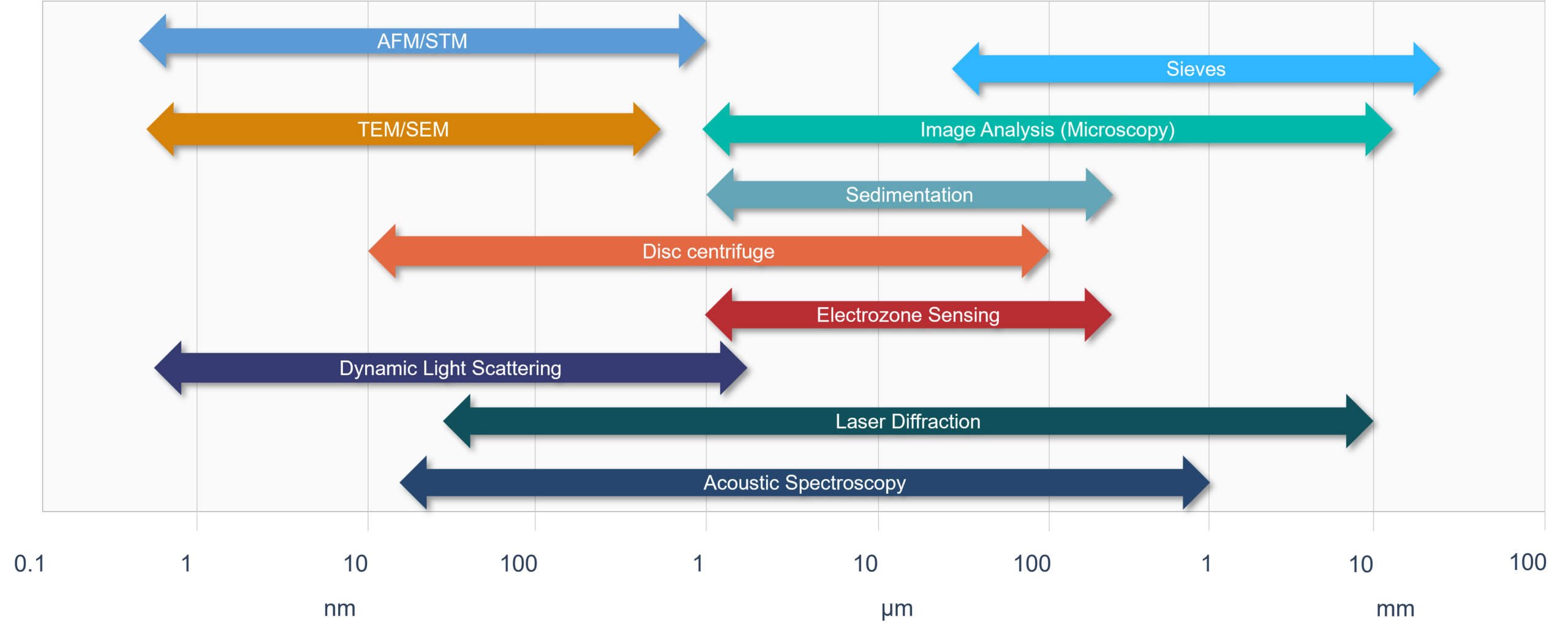
Selecting the appropriate particle sizing method depends on several factors:
-
Expected particle size range
-
Sample type (powder vs dispersion)
-
Required level of sensitivity
-
Application requirements (QC vs research)
In many laboratories, Laser Diffraction and Dynamic Light Scattering are complementary techniques, covering particle sizes from the nanometer to millimeter scale.
Supporting Particle Size Characterization
Particle size analysis is often combined with other characterization techniques to obtain a more complete understanding of materials, including:
-
Surface area and porosity analysis
-
Morphology imaging
-
Zeta potential measurement
-
Thermal and structural characterization
Together, these analytical tools support robust product development, process optimization, and quality assurance.