
Sustainability in the Lab: Replacing Wet Chemistry with Light
The Modern Lab’s Dilemma: The Cost of the “Old Way”
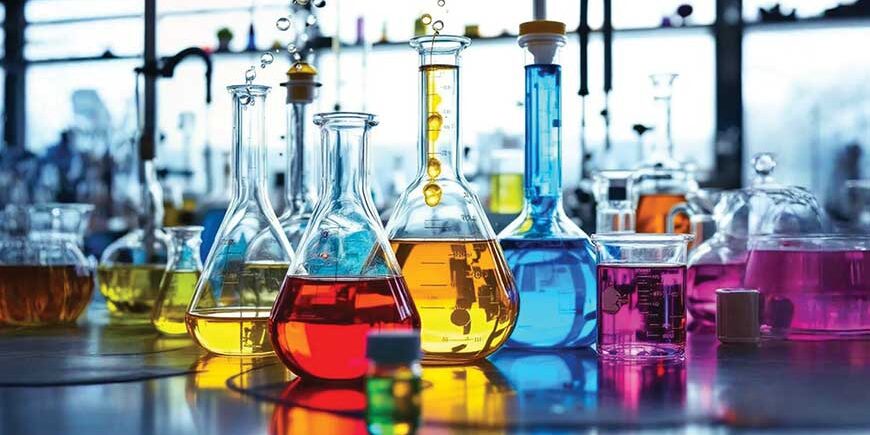
For decades, the gold standard for analyzing palm oil parameters—like Iodine Value (IV), Free Fatty Acids (FFA), and Peroxide Value (PV)—has been wet chemistry titration. Wet chemistry is a form of analytical chemistry that uses classical, hands-on methods to analyze materials in the liquid phase, relying on manual, wet chemical methods rather than automated techniques. While accurate, these methods come with a heavy hidden price tag:
Chemical Dependency: Constant consumption of solvents and hazardous reagents.
Regulatory Burdens: The administrative “headache” of maintaining Poison B License and complying with strict KKM and DOE regulations for specific chemicals usage, like Chloroform, Iodine, etc.
Environmental Impact: High volumes of chemical waste that require expensive specialized disposal services. Wet chemistry often involves evaporating all the liquid to isolate solids for gravimetric analysis, a process that can generate significant chemical waste.
The Training Loop: In a high-turnover environment, the Lab Manager is stuck in a permanent cycle of training new hires. This means a portion of your most senior staff’s time is spent teaching basic titration techniques rather than optimizing the plant.
Wet chemical analysis often requires a reagent required for each chemical test, and these tests may involve qualitative methods (such as observing a color change or when a cloudy ring forms in a test tube) or quantitative methods (such as volume measurements in titration). Volumetric analysis (titration) is a common approach in wet chemistry, relying on a precisely measured known volume of reagents to determine the concentration of an unknown substance present in an unknown solution, often indicated by a visible change such as a color change at the exact point (endpoint), sometimes signaled by a completely different color. Qualitative analysis in wet chemistry uses changes in information that cannot be quantified, such as color or texture changes, to detect the presence of a specific chemical in a solution, while quantitative methods involve more quantitative chemical measurements and quantitative properties. For example, a chemical test can detect proteins in a person’s urine by producing a unique reaction, such as a cloudy ring forms or a color change occurs, or identify metallic ions in a flame test by observing bright colors or color emissions when metal powder is burned. Gravimetric analysis in wet chemistry measures the weight or concentration of a solid formed from a precipitate or dissolved in a liquid, often involving drying and weighing the precipitate to determine concentration. Wet chemistry techniques use glassware like beakers, burettes, and test tubes, and reactions often occur when substances meet, producing a visible change.
The Green Revolution: Bruker FT-NIR
What if you could replace racks of glassware and liters of chemicals with a single beam of light? Bruker FT-NIR (Fourier Transform Near-Infrared) spectroscopy does exactly that.
Instead of reacting a sample with chemicals, FT-NIR passes infrared light through it. The molecules in the oil absorb specific wavelengths, creating a “spectral fingerprint.” In less than 60 seconds, the software translates this fingerprint into accurate concentrations for multiple parameters simultaneously. Unlike wet chemistry techniques, FT-NIR eliminates the need for sensory equipment to record color changes or detect visible change, and does not require the use of test tubes, strong acids, or hazardous reagents.
The “Green” Benefits at a Glance:
Zero Waste: No reagents are consumed, and no hazardous waste is produced.
Non-Destructive: The sample remains intact and can be returned to the production line or used for other tests.
Energy Efficient: One benchtop instrument replaces multiple heating mantles, stirrers, and fume hoods.
Automated wet chemical analysis improves precision and accuracy, minimizes labor intensity, and reduces chemical waste compared to traditional wet chemical methods.
Redefining the Role of the Chemist in the iR4.0 Era
The transition to FT-NIR isn’t just about chemistry; it’s about human capital. We are currently in the Industrial Revolution 4.0 (iR4.0), where data and automation take center stage.
By removing these specific chemicals, you aren’t just saving money on the Poison chemical license or disposal fees; you are removing the physical hazards from the chemist’s daily life.
Instead of wearing a mask and standing over a fume hood for four hours a day to perform manual titrations, the chemist places a small vial of oil into the Bruker FT-NIR. Thirty seconds later, they have all four parameters listed above on their screen. This allows them to spend their time on meaningful work, chemists are “freed” to focus on high-value tasks: process optimization, R&D for new product formulations, and data trend analysis.
This is the essence of iR4.0: moving from “manual labor in a lab coat” to “data-driven process optimization.”
In the iR4.0 era, speed is currency. FT-NIR provides results fast enough to allow for “in-flight” adjustments to the refinery process, preventing off-spec batches before they happen.
Eliminating the Regulatory Headache
For lab managers in Malaysia, the “Poison list B” is a constant reminder of the risks involved in traditional testing. Managing controlled poisons requires meticulous record-keeping, secure storage, and constant audits.
By adopting Bruker FT-NIR, you drastically reduce your laboratory’s chemical footprint.
Sustainability isn’t just about the environment; it’s about operational sustainability. When you remove the need for ‘Poison B’ chemicals, you remove the regulatory risk, the disposal costs, and the safety hazards associated with glass breakage and chemical splashes.
Conclusion: A Future-Proof Laboratory
The move toward FT-NIR is an investment in a cleaner, safer, and more efficient future. By replacing wet chemistry with light, laboratories in the palm oil and confectionery industries can align themselves with global ESG (Environmental, Social, and Governance) standards while simultaneously increasing their throughput.
Automated wet chemical analysis is widely applied in water analysis, with many drinking and wastewater analyses based on these methods as per USEPA, ASTM, and ISO standards. Basic pH and conductivity measurements are commonly used in industrial applications and are recommended by national and international regulatory bodies as part of automated wet chemical analysis. Visual colorimetric tests are recommended for identification and limit tests in pharmaceutical applications, and many pharmacopeias endorse these tests as part of automated wet chemical analysis. Wet chemistry is fundamental in monitoring water and soil quality, ensuring compliance with environmental regulations, and is used for quality assurance, safety, and nutritional labeling in food products. It is also applied to analyze materials in the chemical, mining, and polymer industries, and remains essential for its reliability, low cost, and ability to test for properties that instruments cannot. Wet chemistry serves as a reference method to calibrate or validate results from automated instruments, and some environmental tests, like Biochemical Oxygen Demand (BOD), cannot be done efficiently by instruments alone and require wet chemistry. Nanomaterial synthesis often involves wet chemical methods, such as sol-gel techniques, to control stoichiometry and particle size.
Is your lab ready to go Green?
Stop managing chemicals and start managing data. Contact Us today to learn how Bruker FT-NIR can modernize your workflow, simplify your regulatory compliance, and empower your chemists to do their best work.