
Microplastics Analysis in Water: Techniques and Challenges — A Focus on TED-GC/MS
Microplastics have become a major concern in environmental monitoring due to their widespread presence in water systems and potential impact on ecosystems and human health. Detecting and characterizing these particles requires reliable, sensitive, and reproducible analytical approaches rooted in analytical chemistry, which encompasses the methods and processes for preparing and analyzing organic compounds using advanced laboratory equipment and automation.
Among the available techniques, Thermal Extraction Desorption Gas Chromatography–Mass Spectrometry (TED-GC/MS) stands out as a powerful and efficient solution, particularly when combined with automated systems from GERSTEL. These systems streamline lab operation, improve throughput, and ensure compliance with Good Laboratory Practices (GLP) by supporting traceability, reproducibility, and data quality.
Understanding Microplastics in Water
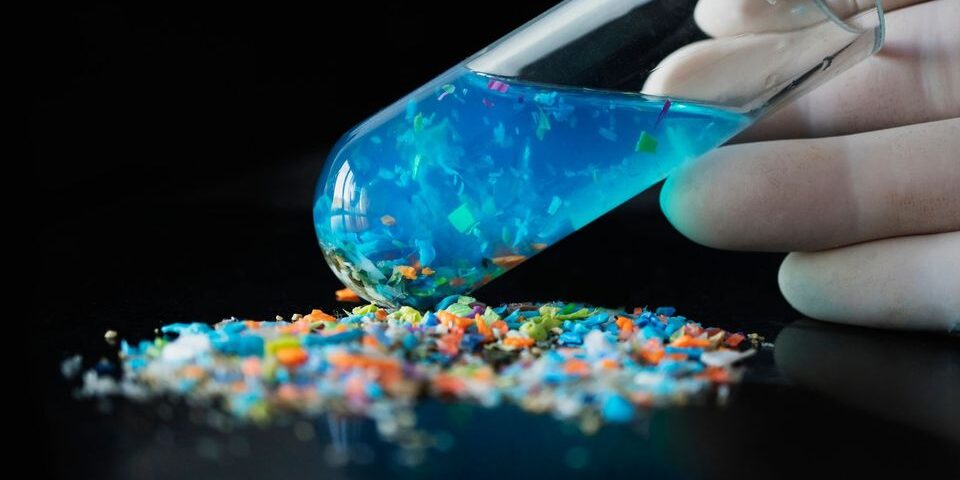
Microplastics are solid synthetic polymer particles that are insoluble in water and measure between 1 µm and 5 mm. They originate from both intentional production (primary microplastics, such as industrial raw pellets and cosmetic abrasive microbeads) and the breakdown of larger plastic debris (secondary microplastics formed by environmental weathering via sunlight, waves, and mechanical wear). Microplastics are classified as emerging contaminants because they persist indefinitely, bioaccumulate in marine life, and absorb ambient toxins.
They are commonly found in:
- Drinking water
- Surface water and rivers
- Wastewater treatment systems
Microplastics have also been detected in marine organisms, soil, rainwater, and even everyday products like salt and sugar, raising concerns about their impact on human health and the environment. Among the largest contributors to microplastic pollution are synthetic textiles, automotive tires, and urban dust, which release tiny plastic particles into the environment.
Their diversity in size, shape, and polymer composition—including small microplastics and nanoplastics—makes analysis particularly challenging.
Challenges in Microplastics Analysis
Microplastics analysis is complex due to several factors:
- Wide particle size range (mm to µm scale, including small microplastics and nanoplastics)
- Complex sample matrices (organic matter, sediments) that can introduce interferences
- Low concentration levels
- Need for reliable polymer identification
Analyzing microplastics in environmental samples involves multi-step processes to isolate, clean, and characterize the polymer material. Workflows can be labor intensive and time consuming, often consuming up to 60% of the total analysis time, which can create bottlenecks in analytical workflows. Complicated workflows may involve extraction, clean-up, and concentration, and the risk of errors increases with complexity, impacting data quality and reliability.
Traditional methods such as microscopy or FT-IR often require extensive sample preparation and manual interpretation. Sample preparation must address the sample matrix, which can interfere with accurate analysis. Solid phase extraction (SPE) and microextraction techniques such as liquid-phase microextraction (LPME) and solid-phase microextraction (SPME) are used to enhance extraction and preconcentration capabilities for microplastics analysis. Automated solid-phase extraction (SPE) is commonly performed automatically using robotic systems, which improves throughput, reproducibility, and accuracy, and can reduce processing time by 33% for 96 samples compared to manual processes. Automated microextraction techniques allow for processing large sample volumes efficiently, and the choice of volume impacts extraction efficiency and compatibility with automation equipment.
Filtration in the microplastics analysis workflow requires careful selection of filters based on size, material, and pore sizes to effectively analyze the desired microplastic sizes, especially small microplastics. These choices directly affect analysis time and the efficiency of sample preparation.
Conventional Techniques vs Thermal Approaches
Microplastics can be analyzed using several techniques:
| Technique | Strength | Limitation |
| Microscopy (optical stereomicroscopy, fluorescence microscopy) | Visual identification | Limited chemical information |
| FT-IR / Raman (including Raman microscopy) | Polymer identification, chemical and morphological characterization down to micron and sub-micron ranges | Time-consuming, particle-based |
| Pyrolysis-GC/MS | Polymer fingerprinting | Limited temperature-resolved insight |
| TED-GC/MS | Efficient bulk polymer characterization | Requires specialized system |
Key analytical technologies for identifying microplastics include optical stereomicroscopy, fluorescence microscopy, Fourier-transform infrared spectroscopy (FTIR), and Raman spectroscopy. Raman microscopy is widely used for the chemical and morphological characterization of microplastics, allowing for the identification of organic and inorganic particles down to the micron and sub-micron ranges.
Among these, TED-GC/MS offers a balanced approach between efficiency, sensitivity, and automation.
What is TED-GC/MS?
Thermal Extraction Desorption GC/MS (TED-GC/MS) is a technique that:
- Thermally extracts volatile and semi-volatile compounds from microplastics
- Transfers them directly into a GC-MS system via direct injection
- Generates characteristic polymer fingerprints
Unlike full pyrolysis, TED operates under controlled thermal conditions, enabling:
- Reduced sample complexity
- Faster analysis
- Minimal sample preparation
Direct injection of purified analytes into the analysis instrument streamlines the workflow and reduces manual handling, improving overall lab efficiency.
Advanced Material Insight: Beyond Conventional Pyrolysis
One of the key advantages of TED-GC/MS, particularly when combined with thermogravimetric analysis (TGA), is its ability to provide temperature-resolved chemical information.
By correlating:
- Mass loss behavior (TGA)
- Evolved gas composition (GC-MS)
TED-GC/MS enables a deeper understanding of material composition across different thermal stages.
This approach allows laboratories to:
- Differentiate overlapping polymer components
- Understand degradation profiles of complex mixtures
- Obtain enhanced compositional insight compared to conventional pyrolysis-GC/MS
In contrast, traditional pyrolysis-GC/MS primarily provides a single-step thermal decomposition profile, which may limit interpretation in complex environmental samples such as microplastics.
Role of GERSTEL Automation in TED-GC/MS
A key advantage of TED-GC/MS is its integration with automated platforms developed by GERSTEL.
These systems provide:
- Automated sample introduction
- Precise thermal control
- Seamless transfer to GC-MS
- Reproducible, standardized workflows
Unlike manual or partially automated setups, GERSTEL systems enable fully controlled and repeatable analysis, which is critical for environmental testing. Automation improves throughput, allows skilled analysts to focus on more complex tasks, and enhances job satisfaction.
Proper maintenance and calibration of laboratory equipment are essential to ensure quality, accuracy, and regulatory compliance in analytical laboratories.
Benefits of Automation for Microplastics Analysis
Automation enhances TED-GC/MS performance by:
- Reducing contamination risk
- Ensuring consistent sample handling
- Increasing sample throughput and improving analysis time
- Improving data reproducibility and overall data quality
This is particularly important for routine monitoring and regulatory applications. Automated workflows also improve traceability and reproducibility, supporting compliance with GLP standards.
Applications in Water Analysis
TED-GC/MS is increasingly applied in:
Environmental Monitoring
- Rivers, lakes, and marine systems
Drinking Water
- Detection of trace microplastics
Wastewater Treatment
- Monitoring removal efficiency
Research and Regulatory Studies
- Polymer identification and quantification
Microplastics Analysis Workflow
A typical analysis workflow for microplastics separation, counting, and identification involves five main steps:
- Sampling: Collecting a matrix where the presence of microplastics must be investigated, which is crucial for accurate analysis.
- Sample Preparation: Includes extraction, clean-up, and concentration. Common chemical agents for digestion include hydrogen peroxide and Fenton’s reagent, while density separation often uses high-density salt solutions.
- Filtration: Careful selection of filter size, material, and pore size is critical for analyzing small microplastics and impacts analysis time.
- Measurement/Data Acquisition: Utilizes techniques such as Raman microscopy, FTIR, and TED-GC/MS to identify and characterize microplastics.
- Analysis/Reporting: Software plays a key role in data analysis and presentation of results, facilitating interpretation and processing of experimental data.
Automated solid-phase extraction and microextraction techniques can be performed automatically using robotic systems, enhancing reproducibility, reliability, and efficiency, and allowing for the processing of large sample volumes.
Conclusion
Microplastics analysis in water requires robust, efficient, and reproducible analytical approaches. While multiple techniques are available, TED-GC/MS offers a highly effective solution by combining thermal analysis with GC-MS detection.
When integrated with automated systems from GERSTEL, TED-GC/MS enables laboratories to achieve:
- Improved workflow efficiency and improved throughput
- Enhanced compositional insight
- Consistent and reliable results
- Reduced manual handling and contamination
This makes it a valuable approach for modern environmental and water analysis laboratories. As research advances, the analysis of nanoplastics (smaller than 1 micrometer) is also becoming increasingly important, with new analytical techniques being developed to address this emerging challenge.
Introduction to Microplastics Analysis
Microplastics analysis has become something we really need to pay attention to. People are getting more concerned about these tiny plastic bits showing up everywhere, and honestly, they should be. We’re talking about plastic pieces smaller than 5 mm – they come from all sorts of places you might not expect. Your face wash, that synthetic shirt you love, even big plastic items that break down over time. These particles are turning up in water, soil, and the air we breathe. That’s got scientists asking some pretty important questions about what this means for our environment and the food we eat.
The World Health Organization stepped in because they recognize we need to get serious about understanding these microplastics. They’re pushing for better ways to find and measure these particles in environmental samples. It makes sense – we can’t make smart decisions about regulations or safety without knowing what we’re actually dealing with. As more researchers dive into this field, we need reliable methods that can handle the real challenges these tiny pollutants create. The science is expanding, and our tools need to keep up if we want to tackle this growing problem effectively.
Sample Preparation
Getting your samples ready for microplastics analysis might seem straightforward, but it’s actually where everything starts to matter. Think of it as the foundation that determines whether your results will be reliable or leave you scratching your head later. You’re taking raw samples—water from a river, sediment from a beach, or tissue from marine life—and transforming them into something your lab equipment can actually work with. Without solid sample preparation, even the best analytical techniques won’t give you the answers you’re looking for.
The approach you take really depends on what you’re working with. If you’ve got liquid samples, filtration becomes your go-to method for separating those tiny plastic particles from everything else floating around. Sometimes you’ll want to follow up with centrifugation to concentrate things further. Solid samples like sediments or biological tissues need a different touch—you might use solvent extraction to coax out embedded particles or mechanical grinding to break things down. There’s also solid phase extraction, which works particularly well when you’re dealing with large sample volumes and need to purify and concentrate your microplastics. The key is matching your technique to your specific sample and what you plan to do with it afterward.
Here’s where good preparation really pays off. When you nail this step, you’re not just making extraction and purification more efficient—you’re also keeping contamination at bay and reducing those pesky matrix interferences that can throw off your results. It takes some effort to optimize your process, but the payoff is worth it. You’ll get consistent, reproducible results that you can actually trust, and your entire analysis workflow becomes smoother and more reliable.
Analytical Techniques
Scientists use several analytical techniques to figure out what microplastic particles are made of and how much is actually out there in environmental samples. Raman spectroscopy stands out as one of the most useful tools we have. It works by measuring how these tiny plastic particles vibrate, which gives us detailed insights into their chemical makeup. What makes this technique so valuable is its ability to tell different types of polymers apart and help researchers identify exactly what kind of plastic they’re looking at.
Another essential method is infrared microscopy, which includes something called Fourier-transform infrared spectroscopy (or FT-IR for short). This approach helps scientists analyze the chemical composition of microplastics in a different way. It’s particularly good at detecting and mapping where these particles show up in complex environmental samples. This gives researchers a clearer picture of how microplastics are distributed and just how abundant they might be in any given area.
Mass spectrometry takes a different approach entirely, often working alongside chromatographic analysis to identify and measure microplastics based on their mass-to-charge ratio. This technique is incredibly sensitive – it can pick up even the smallest traces of microplastics that other methods might miss. That makes it especially valuable for environmental monitoring and research efforts. When you put all these techniques together, they create a comprehensive toolkit that helps scientists understand where microplastics come from, what they’re made of, and what kind of impact they might have on our environment.
Microplastics Composition
When you look at microplastics under a microscope, you’re actually seeing a mix of different polymer types, each with its own unique characteristics. The most common ones you’ll encounter include polyethylene, polypropylene, and polyvinyl chloride (PVC). What’s interesting is that the specific blend of polymers in any sample tells a story about where those microplastics came from. Take personal care products, for instance – the microplastics from these sources are typically made of polyethylene or polypropylene. But if you’re examining samples from ocean environments, you’re more likely to find PVC and polyethylene terephthalate (PET) in the mix.
Here’s why knowing what types of plastics we’re dealing with matters so much. Each polymer behaves differently when it encounters organic compounds and contaminants in the environment. This means some plastics might stick around longer than others, and some could be more toxic. When researchers can pinpoint exactly which types of plastics are showing up in environmental samples, they’re better equipped to understand the real risks we face from microplastics exposure. This knowledge becomes the foundation for developing smarter strategies to tackle plastic pollution at its source.
Challenges in Microplastics Analysis
Working with microplastics can feel like searching for needles in a haystack. These tiny particles, often just micrometers in size, create real headaches when you’re trying to detect and measure them accurately. You’re not just dealing with their small size either. Organic matter, sediments, and other contaminants love to interfere with your analysis, making it frustratingly easy to end up with results that don’t tell the true story.
Here’s what makes things even trickier: there’s no universal playbook for microplastics analysis. Without standardized methods, comparing your findings with other studies becomes nearly impossible. That’s where automation starts to make sense. When you automate sample preparation, you’re taking human error out of the equation for complex steps like solid phase extraction and solvent extraction. The systems work more precisely than we can, and they’re much less likely to introduce contamination that throws off your results.
The good news is that advanced analytical techniques like Raman spectroscopy and mass spectrometry are giving us the sensitivity and selectivity we need to spot these particles reliably. Method development keeps pushing forward, and new protocols are constantly improving how efficiently and consistently we can analyze samples. These innovations are genuinely helping laboratories get more accurate, dependable results across all kinds of sample types. It’s making the whole process more manageable and trustworthy.