Pyrolysis GC-MS: Acrylates and Methacrylates

Acrylates and methacrylates are two important classes of polymers used in a wide variety of products. Acrylates are polymers made from a family of monomers, which have a vinyl group attached to the carbonyl carbon of an ester group. Methacrylates have a methyl group attached to the alpha carbon. Acrylates are used in the manufacture…

Pyrolysis GC-MS: Nylon and Nylon-Containing Products

Nylon is an important class of synthetic polymers used in a variety of products. Nylon polymers are aliphatic polyamides that are classified in two groups according to their composition. These are the Ω-aminocarboxylic acid-type and the diamine-dicarboxylic acid-type. The Ω-aminocarboxylic acid-types consist of a single amine group attached to a carbonyl group. The diamine-dicarboxylic acid-types…

Micro-interfacial polymerization of porous PEDOT

Poly (3,4-ethylene dioxythiophene) (PEDOT) is an electrically conductive polymer that shows various promising applications in flexible electronics. However, previous studies have mostly focused on enhancing the conductivity, while ignoring the design and development of porous PEDOT materials. Herein, we report a novel and sustainable strategy of utilizing a deep eutectic solvent of ferric chloride hexahydrate/acetamide…

2D Titanium carbide printed flexible ultrawideband

Flexible titanium carbide (Ti3C2) antenna offers a breakthrough in the penetration of information communications for the spread of Internet of Things (IoT) applications. Current configurations are constrained to multi-layer complicated designs due to the limited conformal integration of the dielectric substrate and additive-free Ti3C2 inks. Here, we report the flexible ultrawideband Ti3C2 monopole antenna by…

Quantification of Oxyethylene in Poloxamers in Full Automation on the Fourier 80

Poloxamers are synthetic block copolymers composed of a central hydrophobic oxypropylene chain connecting two hydrophilic oxyethylene ends. An attractive variety of valuable applications in fields such as drug delivery and cosmetics have been found, taking advantage of their amphiphilic and surfactant properties. The quantification of the oxyethylene content is of great interest. A poloxamer’s ability…

Lubricant Aging: Characterization using NMR

Lubricants (lubricating oils and greases) are an essential part of mechanical processes, in which friction and heating occur. Lubricants, i.e. oils with additives, prevent damage to bearing components thus maximizing life time. Lubricants age due to multiple stress factors, and require replacement from time to time. Complementing established analytics, NMR with its various facets is…

Mimicking a GHz NMR

For most NMR applications, higher external magnetic field strengths are preferred for better dispersion and sensitivity, but are usually outside the budgets of educational labs. The good news is the Fourier 80 can do the job with a little help from auxiliary agents and Bruker’s step-by-step protocols designed for students. Download PDF

Coffee and Milk – Fourier 80

The process of using NMR for molecular structure identification and verification can be applied to many real-world examples to enhance a student‘s learning experience. In these protocols, students are given the chance to apply NMR technology to evaluate samples many of them are probably very familiar with; coffee and milk. Download PDF

Food Safety Analysis – Refined Risk

In the refining process for edible oils conditions must be carefully controlled to avoid the formation of toxic process contaminants, such as 2-MCPD, 3-MCPD, glycidol and their fatty acid esters. An automated GC/MS-method now enables highly efficient determination of these compounds based on standard methods such as ISO 18363-1, AOCS Cd 29c-13, and DGF C-VI…

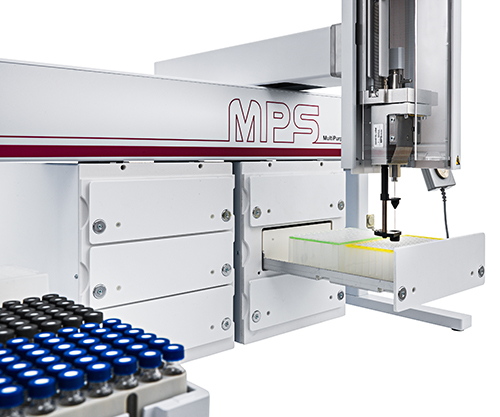
Determination of 3-MCPD & Glycidol in Edible Oils & Fats via Automated GERSTEL Multipurpose Sampler Based on AOCS Cd 29a-13 Method

The objective of this note focuses on the fully automated solution of the determination of 3-monochloropropanediol (3-MCPD) and glycidol in edible oils based on the AOCS Cd 29a-13 methods. This method is also applicable for the determination of 2-monocloropropanediol (2-MCPD). The glycidyl esters first react with acidified sodium bromide to form its 3-monobromopropanediol (3-MBPD) ester…

Edible Oil Oxidation Monitoring with the microESR

Rancidity of vegetable oils is a major problem in food related industries. It occurs during storage and is caused by oxidation of unsaturated fatty acids, resulting in foul odors and tastes in the product. Oxidative stability is affected by a number of factors including oxygen, temperature, presence of metals and light. The resistance of edible…

TD-NMR Snack Food Analyzer

Bruker’s versatile and easy-to-use bench-top TD-NMR analyzer is a turn-key solution for rapid Quality/Process control in snack food manufacturing. It acquires time-domain data in a mater of seconds to quantitatively determine physical and chemical properties of materials. The signal is obtained from the hydrogen atomic nuclei present the samples. The relaxation behaviors of the NMR…